
You run a small butcher shop that packs 50 steaks a day. A nearby central kitchen vacuum‑seals 2,000 prepared meals every morning. Neither of you should use the same packaging machine. Yet when you search for “vacuum packaging equipment,” you see the same list of chamber machines, belt sealers, and tray sealers — with no clear guidance on which matches your workload.
This article provides a practical framework to match vacuum packaging equipment architectures to your product characteristics, daily volume, and operational constraints. You will learn how to make a confident, informed choice without deciphering marketing jargon.
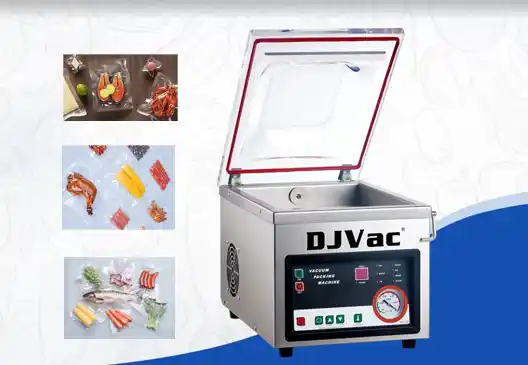
Three Questions to Ask Before Looking at Any Machine
Every vacuum packaging decision starts with your product and process, not a brochure. Answer these three questions honestly.
Question 1: What are the shape, size, and moisture level of your product?
-
Dry and solid (nuts, coffee, dry spices) → Most standard chamber machines work well.
-
Wet or marinated (fresh meat, poultry, fish, cheese) → Requires wider seal bars, liquid‑resistant vacuum pumps, and often double sealing.
-
Liquid or semi‑liquid (sauces, soups, brines) → Needs gentle vacuum ramp and anti‑splash design to prevent liquid being sucked into the pump.
-
Sharp or bone‑in (pork chops, lamb ribs, crab legs) → Vacuum skin packaging (VSP) or thicker bags with bone guards are necessary.
Question 2: How many packs do you seal per day — average and peak?
-
Under 300 packs/day → Single‑chamber tabletop machine is usually sufficient.
-
300–1,000 packs/day → Double‑chamber machine or a semi‑automatic tray sealer.
-
1,000–5,000 packs/day → Automatic belt vacuum sealer or continuous tray sealer with gas flush.
-
Over 5,000 packs/day → Industrial inline systems with integrated feeding and stacking.
Question 3: What is your final package format — bag, tray, or skin?
-
Pouches or pre‑made bags → Chamber vacuum sealer (single or double) or continuous belt sealer.
-
Rigid trays with film lid → Tray sealing machine, optionally with modified atmosphere (MAP) for extended shelf life.
-
Skin‑tight film directly on product → Vacuum skin packaging machine — best for premium presentation and eliminating purge.
Once you have answered these three questions, you can explore how different machine families address each scenario. See our complete product range overview for chamber sealers, tray sealers, and skin packers.
Technology Comparison — Which Architecture Aligns with Your Answers?
The table below translates your answers from the previous section into specific equipment categories.
| Machine Architecture | Daily Pack Volume (typical) | Best Product Types | Key Operational Strength |
|---|---|---|---|
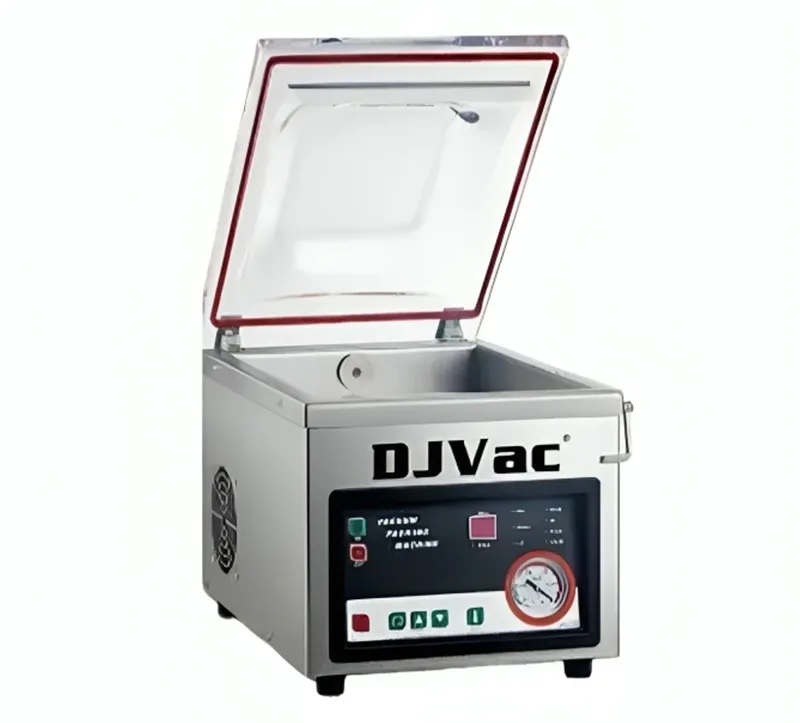
| Single‑chamber vacuum sealer | 50 – 300 | Dry goods, small meat cuts, cheese blocks | Low cost, compact, easy to operate |
| Double‑chamber vacuum sealer | 300 – 1,000 | Wet or marinated meats, fish fillets, smoked products | Faster cycle, better liquid handling |
| Automatic continuous belt sealer | 1,000 – 5,000+ | Frozen foods, bulk portions, high‑volume bagging | Minimal labor, consistent seal quality |
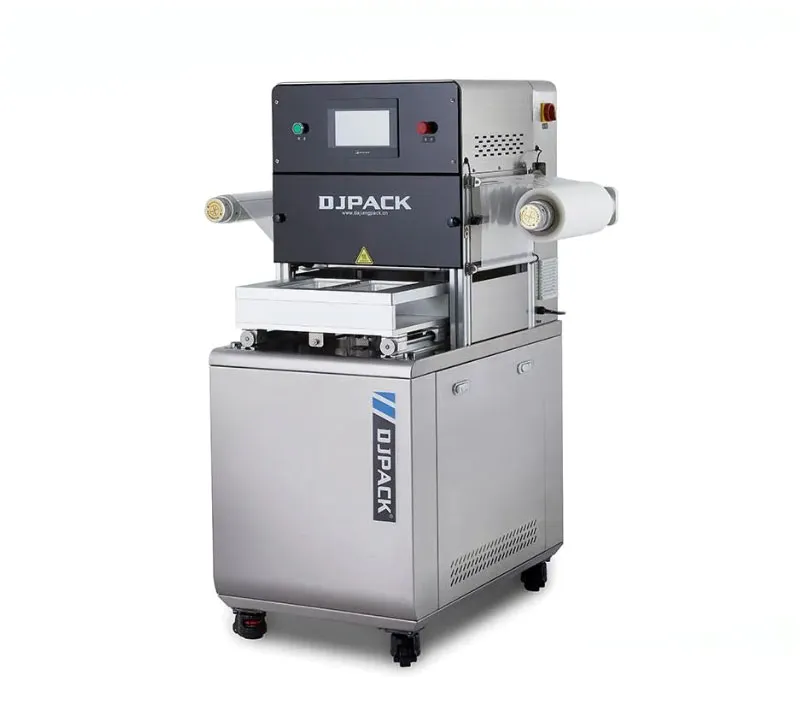
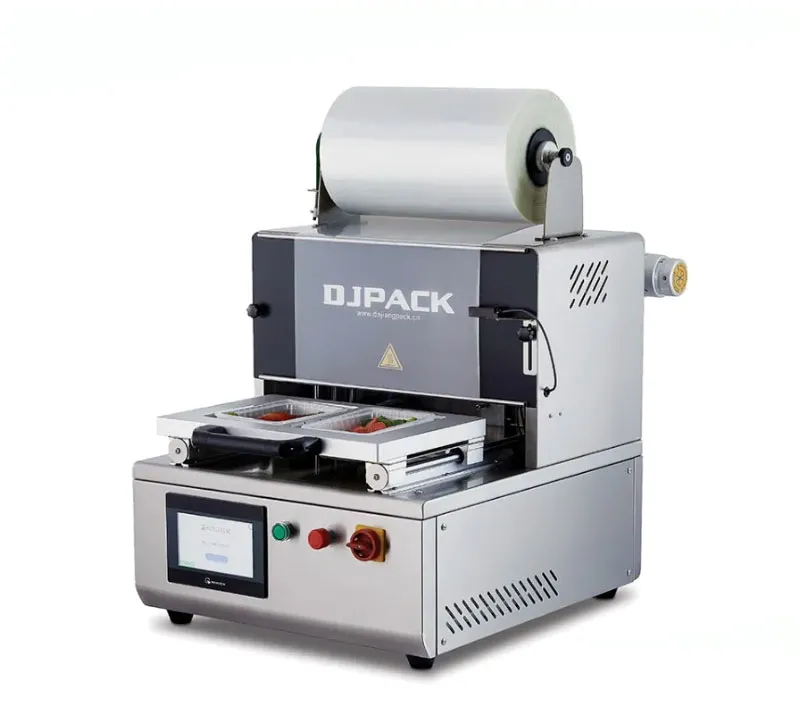
| Tray sealer (semi‑auto / auto) | 500 – 10,000+ | Retail trays for meat, produce, ready meals | MAP capability, retail‑ready presentation |
| Vacuum skin packer | 200 – 2,000 | Bone‑in meat, delicate seafood, premium cheese | No purge, puncture resistance, high appeal |
How to use this table:
-
If your volume falls between two rows, consider the higher capacity option. Peak season demand often exceeds average daily output.
-
If you package both bags and trays, a chamber machine plus a small tray sealer may be more flexible than one large system.
According to the U.S. Department of Agriculture (USDA) Food Safety and Inspection Service, vacuum packaging removes air from the package to slow down the growth of spoilage organisms and extend shelf life. However, the agency warns that anaerobic bacteria such as Clostridium botulinum can grow in vacuum‑packaged products if temperature control is inadequate. This highlights why selecting equipment with reliable seal integrity and consistent vacuum levels is not just about quality — it is a food safety decision.
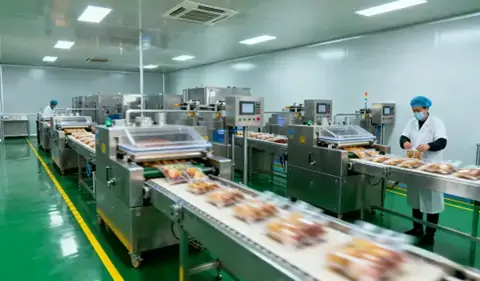
Five‑Step Decision Flow for Your Specific Operation
Follow these steps to narrow down your options from dozens of possible models to one or two suitable architectures.
Step 1: Measure your largest and smallest product dimensions
-
Length, width, and height (or depth) of the product after it is placed in a bag or tray.
-
Why it matters: The machine’s chamber or sealing nest must be at least 30mm larger in each dimension. A product that barely fits will slow down loading and cause seal wrinkles.
Step 2: Determine the required vacuum level and speed
-
Dry products need 90–95% air removal. Wet or oxygen‑sensitive products need 99%+ (≤10 mbar residual pressure).
-
Why it matters: Higher vacuum levels require larger pump capacity (m³/h). A 20 m³/h pump takes roughly twice as long as a 40 m³/h pump to reach the same vacuum. That extra 3 seconds per cycle adds 30 minutes of labor per 600 packs.
Step 3: Check your facility utilities
-
Single‑phase 110V/220V → chamber machines up to double‑chamber.
-
Three‑phase power + compressed air (6–8 bar) → automatic belt sealers and most tray sealers.
-
Why it matters: Installing three‑phase power in a small shop can cost several thousand dollars and take weeks. Match the machine to what you already have.
Step 4: Decide on gas flushing (MAP)
-
Do you need to extend shelf life beyond 7–10 days for fresh meat, fish, or produce? If yes, choose a machine with gas flush capability.
-
Why it matters: Standard vacuum packaging without gas flush may only give 3–7 days for fresh red meat. MAP with 70–80% oxygen (for red meat) or high CO₂ (for poultry/meals) can extend shelf life to 14–21 days.
Step 5: Evaluate cleaning and maintenance
-
Will the machine be used for multiple products per day (e.g., raw meat then cheese)? If yes, quick‑release sealing dies and smooth stainless steel surfaces are essential.
-
Why it matters: A machine that takes 45 minutes to disassemble and clean will cost you over 200 hours of labor per year compared to a 10‑minute washdown design.
For a deeper look at how different industries (meat, seafood, prepared meals) apply these steps, visit our solutions section for customized packaging lines.
Real‑World Application — Two Contrasting Scenarios
Scenario A: Artisan cheese producer packing 200 wheels per day
-
Product: Soft and hard cheeses, sizes from 200g to 3kg, some with rinds.
-
Challenges: Cheese whey can contaminate seals; different wheel heights require adjustable chamber depth.
-
Recommended approach: Single‑chamber vacuum sealer with double seal bars and programmable vacuum speed. A 40 m³/h pump ensures fast cycles for soft cheese that might deform under slow vacuum.
-
Why not a continuous sealer? Volume is too low to justify automation, and the variety of sizes requires manual handling.
Scenario B: Regional meat processor supplying 1,500 retail trays of ground beef and pork chops daily
-
Product: Pre‑trayed ground meat (500g, 1kg) and bone‑in pork chops on foam trays.
-
Challenges: Ground meat has high surface area and spoils quickly; pork chops have bone edges that puncture standard bags.
-
Recommended approach: Semi‑automatic tray sealer with MAP (70% O₂ / 30% CO₂ for red ground meat) for the beef trays, plus a vacuum skin packaging machine for the bone‑in pork chops.
-
Key decision driver: Two different formats (tray vs. skin) require two machine types, but the combined volume justifies both.
Next Steps — From Architecture to Specific Evaluation
You have now matched your product volume, shape, and format to a machine family: single‑chamber, double‑chamber, continuous belt, tray sealer, or skin packer. The next logical step is to compare the technical specifications within that family — such as seal bar length, pump maintenance intervals, and programmable settings for different products.
For example, if you determined that a double‑chamber vacuum sealer fits your 600 packs/day of wet‑marinated chicken, you would then evaluate chamber depth, seal wire material (single vs. double), and whether the pump is oil‑lubricated (longer life) or oil‑free (less maintenance). These details directly affect your daily throughput and total cost of ownership.
Related Reading
-
How Modified Atmosphere Packaging (MAP) Extends Shelf Life for Different Foods
-
Single‑Chamber vs Double‑Chamber Vacuum Sealers: When to Upgrade
-
Hygienic Design Standards for Food Packaging Equipment
-
Troubleshooting Common Vacuum Seal Failures





 English
 Pусский