
Vacuum packaging removes oxygen — but it does not eliminate the need for refrigeration. In fact, the absence of oxygen creates a specific food safety hazard: certain dangerous bacteria, particularly Clostridium botulinum, can thrive in oxygen-free environments if temperatures are not tightly controlled.
For processors, distributors, and retailers of vacuum-packaged fresh products, temperature monitoring is not optional. It is the primary barrier between a safe product and a potentially fatal food safety incident.
This guide explains the regulatory requirements, the science behind temperature control, and the practical steps for implementing an effective cold chain monitoring system.
The Science Behind Temperature Control — Why It Matters for Vacuum-Packaged Products
Vacuum packaging extends shelf life by removing oxygen, which slows the growth of aerobic spoilage organisms. However, this same environment creates an opportunity for anaerobic bacteria — organisms that do not require oxygen to grow.
The primary hazard: Clostridium botulinum
-
C. botulinum is an obligate anaerobe — it thrives in the absence of oxygen.
-
It produces a neurotoxin that can cause a fatal form of food poisoning.
-
Non-proteolytic strains can grow and produce toxin at temperatures as low as 3°C (37.4°F) .
-
The bacteria are commonly found in the environment as spores and can be present on raw meat, fish, and vegetables before packaging.
What this means for your operation:
-
Vacuum packaging removes the natural “warning system” — spoilage organisms that would normally signal deterioration before pathogens become dangerous.
-
Temperature abuse can allow C. botulinum to grow and produce toxin without obvious signs of spoilage.
-
As the UK Food Standards Agency (FSA) guidance states: “Below 3°C, harmful bacteria, such as C. botulinum, will not grow.”
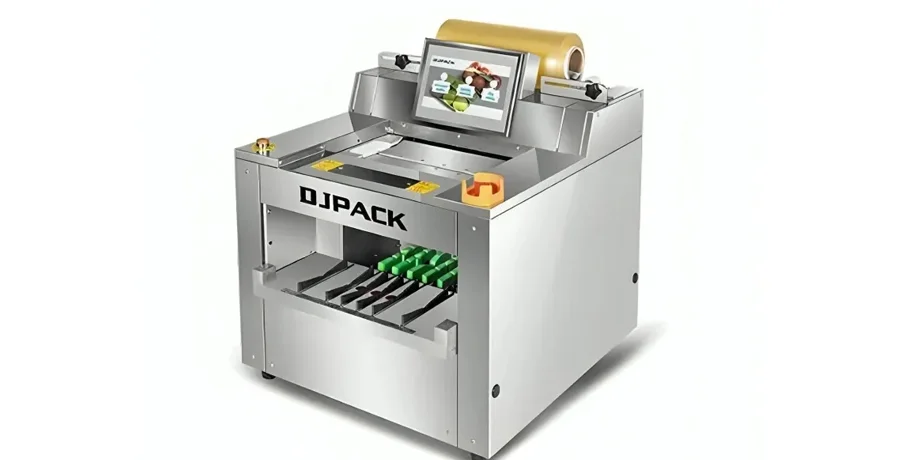
To understand how different vacuum packaging equipment types support consistent seal integrity — which is essential for maintaining the oxygen-free environment that temperature control depends on — explore our range of Food Wrapping Machine designed for food safety compliance.
Key Temperature Thresholds Every Operator Must Know
Different temperature thresholds trigger different safety requirements. Understanding these numbers is essential for compliance and food safety.
| Temperature Threshold | Requirement | Regulatory Source |
|---|---|---|
| ≤ 3°C (37.4°F) | C. botulinum will not grow; safe for extended shelf-life products | UK FSA guidance |
| ≤ 5°C (41°F) | Standard refrigeration requirement for perishable foods; TCS foods must be maintained at or below this temperature | FDA Model Food Code |
| ≤ 3.3°C (38°F) | Required for reduced oxygen packaged (ROP) fish to prevent C. botulinum type E outgrowth | FDA warning letter guidance |
| 3–8°C | Maximum 10-day shelf-life for VP/MAP foods without additional controlling factors | UK FSA guidance |
| Below –18°C (0°F) | Frozen storage — bacterial growth is effectively halted | Industry best practice |
Practical interpretation:
-
If your vacuum-packaged product has a shelf-life of 10 days or less and is stored at 3–8°C, the risk is considered manageable.
-
If your product has a shelf-life exceeding 10 days, you must either maintain storage below 3°C throughout the entire shelf-life or implement additional controlling factors (heat treatment, pH ≤5, salt ≥3.5%, or water activity ≤0.97).
-
For reduced oxygen packaged fish, FDA requires storage below 38°F (3.3°C) and recommends continuous temperature monitoring with daily visual checks of recorded data
External reference: The UK Food Standards Agency’s guidance on “Vacuum packed chilled foods: Reducing the risk of Clostridium botulinum” (available in the UK National Archives) establishes the foundational “10-day rule” that has been adopted by food safety authorities worldwide. The guidance states: “A maximum 10-day shelf-life is recommended for VP/MAP foods stored at 3-8°C, if other controls are not used.” This recommendation is based on the scientific consensus that C. botulinum does not grow below 3°C, making temperature the primary control measure.
Temperature Monitoring Technologies — From Basic to Advanced
Effective cold chain management requires the right monitoring tools for each stage of the supply chain.
Basic Monitoring: Manual Temperature Checks
-
Method: Handheld thermometers (bi-metal stemmed, digital, thermocouple, or infrared) are used to spot-check product or air temperatures.
-
Best for: Receiving inspections, periodic checks during storage, and spot verification.
-
Limitation: Provides only a snapshot; does not capture temperature excursions that occur between checks.
Intermediate Monitoring: Data Loggers
-
Method: Electronic devices that record temperature at set intervals and store data for later download.
-
Best for: Transport monitoring, warehouse storage verification, and audit trails.
-
Advantage: Provides continuous temperature records; can document temperature history for regulatory compliance.
-
Example: PDF data loggers with USB connectivity allow quick access to temperature reports without specialized software.
Advanced Monitoring: Real-Time IoT Systems
-
Method: Wireless sensors with IoT connectivity that transmit temperature, humidity, and location data to cloud dashboards in real time.
-
Best for: High-value products, extended supply chains, regulatory compliance with FSMA 204.
-
Advantage: Enables immediate alerts for temperature excursions; creates a continuous, auditable record of product integrity.
External reference: The FDA’s Food Traceability Rule (FSMA 204), with a compliance deadline of July 20, 2028, explicitly mandates that entities involved in the cold food chain maintain detailed records of critical tracking events (CTEs) and key data elements (KDEs). Temperature monitoring plays a central role: every cooling, packing, shipping, receiving, and transformation event must be documented with traceability records capable of retrieval within 24 hours if requested by the FDA. The rule explicitly references connected sensors monitoring temperature, humidity, vibration, and location in real time.
Temperature Monitoring Requirements by Product Category
Different vacuum-packaged products have different monitoring requirements based on their inherent risk profile.
| Product Category | Critical Temperature | Monitoring Frequency | Shelf-Life Implication |
|---|---|---|---|
| Fresh red meat (vacuum packaged) | ≤3°C (37.4°F) | Continuous recommended; daily checks minimum | Can exceed 10 days if temperature maintained |
| Poultry (vacuum packaged) | ≤3°C (37.4°F) | Continuous recommended | Limited by Salmonella and Campylobacter risks |
| ROP fish (vacuum packaged) | ≤3.3°C (38°F) | Continuous monitoring with recording thermometer; daily visual check | FDA requires strict temperature control |
| Prepared meals (sous-vide, vacuum packaged) | ≤3°C (37.4°F) | Continuous monitoring | Must document cooking, chilling, and storage temperatures |
| Frozen vacuum-packaged products | ≤ –18°C (0°F) | Continuous monitoring | Shelf-life measured in months to years |
Five Essential Steps for Implementing a Cold Chain Monitoring Program
Step 1: Identify critical control points (CCPs) in your cold chain
-
Map every point where temperature must be controlled: receiving, storage, packaging, loading, transport, unloading, and retail display.
-
Why it matters: Temperature abuse can occur at any point. The hazard analysis determines where monitoring is most critical.
Step 2: Establish critical limits and monitoring procedures
-
Set maximum and minimum temperature values for each CCP.
-
Define how often the temperature will be monitored and what equipment will be used.
-
Why it matters: Critical limits are the boundary between safe and unsafe. They must be scientifically validated.
Step 3: Deploy appropriate monitoring technology
-
Use data loggers or IoT sensors for continuous monitoring during transport and storage.
-
For manual checks, ensure thermometers are calibrated according to manufacturer specifications.
-
Why it matters: Inaccurate temperature readings can lead to false confidence or unnecessary product loss.
Step 4: Establish corrective action procedures
-
Define what happens when temperature limits are exceeded.
-
Include product disposition decisions (hold, test, or discard).
-
Why it matters: A monitoring system without corrective actions is not a control system.
Step 5: Maintain documentation and audit trails
-
Keep temperature records for regulatory inspection.
-
For FSMA 204 compliance, ensure records can be retrieved within 24 hours.
-
Why it matters: Documentation demonstrates due diligence and provides evidence of control.
For guidance on integrating temperature monitoring into your packaging workflow — from equipment selection to HACCP implementation — Visit our solutions section to explore our comprehensive packaging solutions.
Real-World Application Scenarios
Scenario A: Meat processor exporting vacuum-packed beef with 60-day shelf-life
-
Products: Vacuum-packed subprimal cuts, shipped by sea freight to international markets.
-
Key requirements: Temperature must remain ≤3°C throughout the 40–50 day voyage.
-
Monitoring approach: IoT-enabled data loggers placed inside each shipping container, transmitting temperature data in real time. Temperature excursions trigger immediate alerts and product hold decisions upon arrival.
-
Critical spec: Temperature monitoring devices must be placed at the “cold spot” of the container to ensure worst-case conditions are captured.
Scenario B: Small-scale seafood processor packaging vacuum-packed salmon fillets
-
Products: Fresh salmon fillets, vacuum packaged with a 7-day shelf-life.
-
Key requirements: FDA requires storage below 38°F (3.3°C) for ROP fish.
-
Monitoring approach: Digital data loggers in each refrigerated storage unit, with daily visual checks of recorded data as recommended by FDA.
-
Critical spec: Thermometer calibration verified annually to ensure accuracy.
Next Steps — From Temperature Monitoring to Integrated Cold Chain Management
You have now understood the science behind temperature control for vacuum-packaged products, the key regulatory thresholds, the available monitoring technologies, and the steps to implement an effective program.
The next logical step is to integrate temperature monitoring into your broader quality management system — connecting packaging equipment performance, seal integrity testing, and cold chain monitoring into a single, auditable process. For vacuum-packaged products with extended shelf-life, this integration is not just best practice; it is a regulatory requirement.
Related Reading
-
Food Safety Considerations for Vacuum-Packaged Fresh Products
-
FSMA 204 Compliance Guide for Food Processors
-
Seal Integrity Testing Methods for Vacuum Packaging
-
HACCP Implementation for Vacuum Packaging Operations
-
Data Logger Selection Guide for Cold Chain Monitoring





 English
 Pусский