
If you have ever tried to vacuum package a bone-in pork chop or a spiny lobster tail, you know the problem immediately. Standard vacuum bags wrinkle around bones, trap air pockets, and often puncture under vacuum pressure. The result? Spoilage, purge leakage, and poor retail presentation.
Vacuum skin packaging (VSP) offers a fundamentally different approach. Instead of placing the product in a pre-formed bag, VSP uses heat and vacuum to drape a flexible film tightly around the product — like a second skin — and seal it to a rigid tray or paperboard. This guide explains how VSP works, why it excels for bone-in meats and seafood, and what to consider when evaluating equipment.

What Is Vacuum Skin Packaging and How Does It Work?
Vacuum skin packaging is an advanced form of vacuum packaging where the top film is heated and formed directly around the product, adhering to every contour of its surface. Unlike conventional vacuum packaging — which places products in a pre-formed bag and evacuates air from the entire chamber — VSP eliminates the gaps, folds, and wrinkles that traditional vacuum bags create around irregularly shaped items.
The VSP process consists of five steps:
-
Product placement: The food item is placed on a rigid bottom tray or paperboard substrate.
-
Film heating: A top film is heated to make it pliable and formable.
-
Vacuum application: A deep vacuum is applied, evacuating all air from the package.
-
Film forming: The heated film is drawn tightly around the product, conforming to every surface — bones, curves, and irregular edges included.
-
Sealing: The film is sealed to the tray or board, creating a hermetic, leak-proof package.
What this means for your product:
-
No air pockets remain to harbor oxygen or moisture.
-
The film stays in contact with the product surface, eliminating purge (liquid) from pooling in corners.
-
The package volume is virtually the same as the product volume, reducing shipping and storage space.
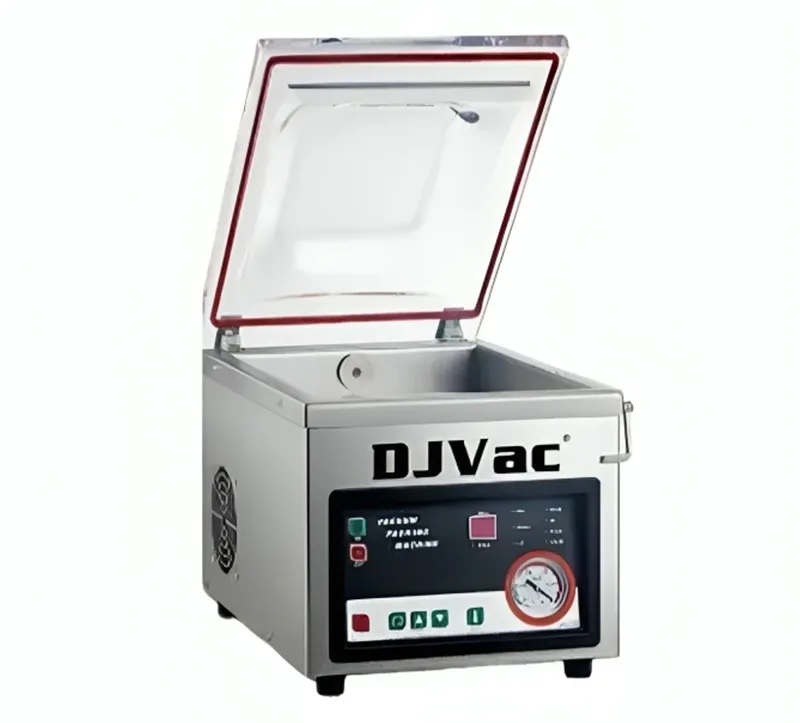
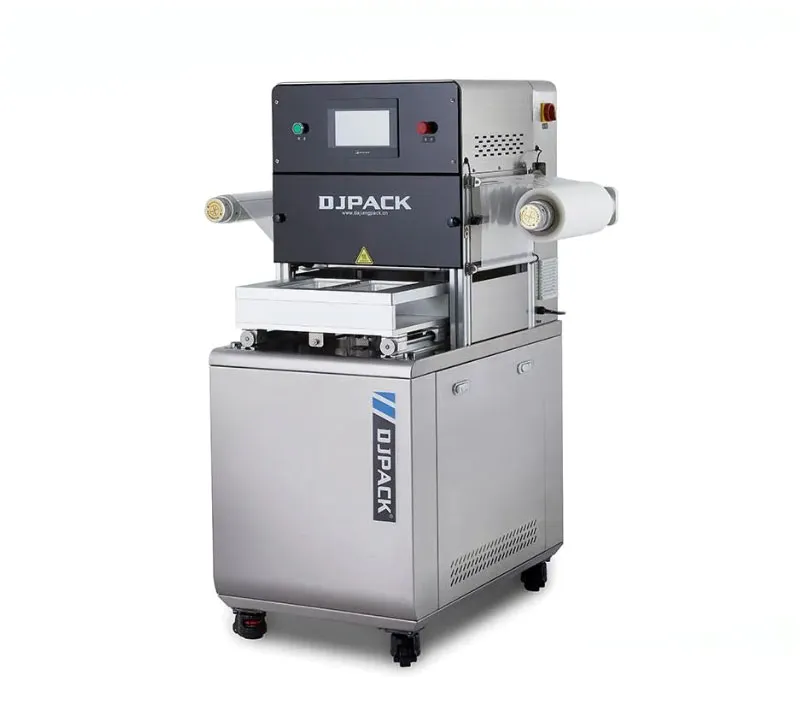
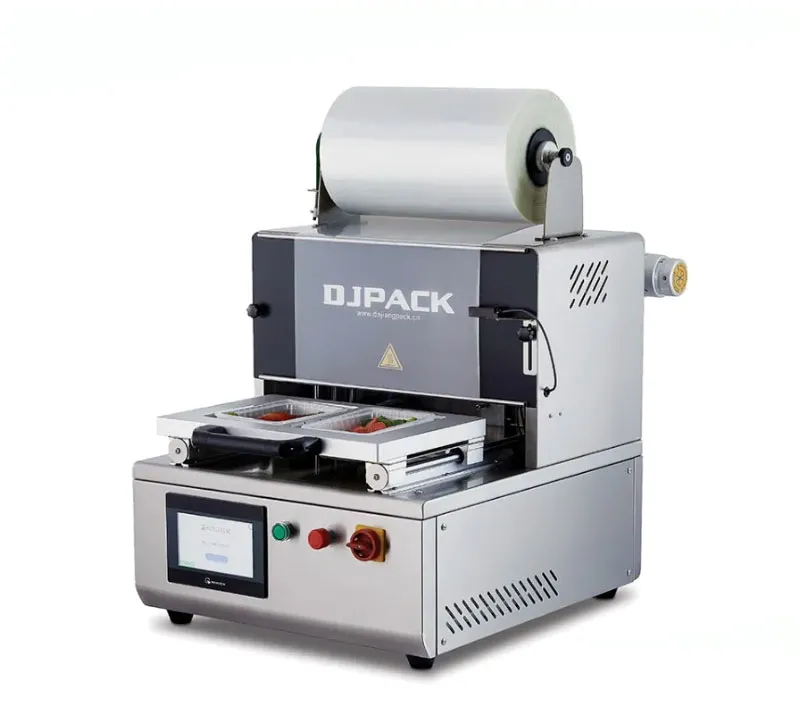
To understand how different machine configurations — from tabletop to floor-standing models — support the VSP process, explore our vacuum skin packaging machine overview.
VSP vs Conventional Vacuum Bag vs MAP — A Technical Comparison
Not all vacuum packaging is created equal. The table below compares vacuum skin packaging against the two other dominant fresh food packaging technologies.
| Factor | Vacuum Skin Packaging (VSP) | Conventional Vacuum Bag | Modified Atmosphere Packaging (MAP) |
|---|---|---|---|
| Air removal | Complete; film conforms to product surface | High (90–99%), but folds trap residual air | Partial; replaced with gas mixture |
| Bone puncture risk | Very low — film conforms around bones without tension points | High — sharp bones puncture bags under vacuum | Moderate — tray provides protection |
| Purge (liquid) accumulation | None — film contacts product surface, no pooling | Common — liquid collects in bag folds | Present — liquid can pool in tray |
| Product visibility | Excellent — transparent film shows full product | Good, but wrinkles obscure view | Excellent — clear lid film |
| Shelf life (fresh pork belly) | 13–14 days | 10–12 days | 7–9 days |
| Packaging material usage | Lower — minimal film, no excess bag material | Moderate | Higher — tray + lid film + gas |
| Typical applications | Bone-in meat, irregular seafood, premium cuts | Primal cuts, frozen items, dry goods | Retail trays, produce, bakery |
External reference: A 2024 research study comparing packaging strategies for fresh pork belly found that samples packaged in VSP exhibited the longest shelf life (13–14 days) with lower purge and reduced fat and colour oxidation compared to MAP-packaged samples. This demonstrates that VSP is not just a presentation upgrade — it delivers measurable preservation advantages.
Why VSP Excels for Bone-In Meats
Bone-in meats — pork chops, T-bone steaks, lamb racks, chicken portions — are among the most challenging products to package. Here is why VSP addresses each challenge.
Challenge 1: Bone puncture
-
Standard vacuum bags are stretched tightly around sharp bone edges during evacuation. The tension often causes micro-tears or complete punctures, compromising the vacuum seal.
-
VSP solution: The film is heated and formed around bones rather than stretched over them. It conforms without tension, eliminating puncture risk.
Challenge 2: Air pockets around bones
-
Bones create irregular gaps that standard bags cannot fill. These air pockets contain residual oxygen, which accelerates spoilage and discoloration.
-
VSP solution: The heated film flows into every crevice, completely eliminating air pockets.
Challenge 3: Purge accumulation
-
As meat ages, natural juices (purge) are released. In standard vacuum bags, purge pools in the lowest point of the bag, creating an unappealing appearance and potential leakage.
-
VSP solution: The film contacts the meat surface directly, so purge is either absorbed by the substrate or remains in minimal quantities without visible pooling.
Challenge 4: Retail presentation
-
Consumers buy with their eyes. A wrinkled bag with pooled purge does not inspire confidence.
-
VSP solution: The transparent film creates a “second skin” that shows the product in its natural form, enhancing visual appeal and enabling vertical shelf display.
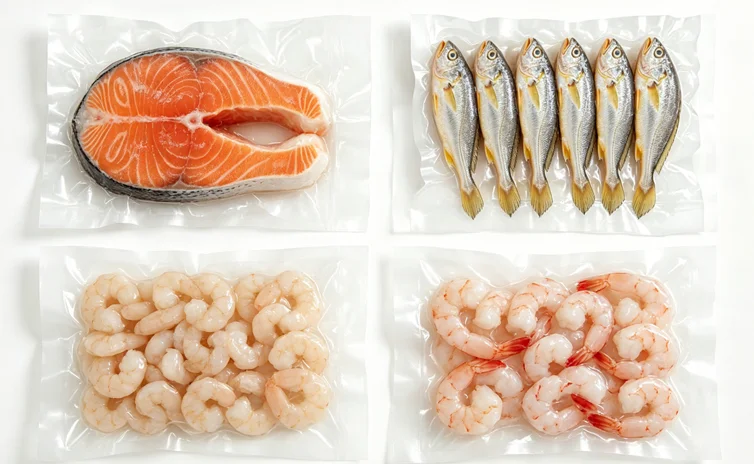
Why VSP Excels for Seafood
Seafood presents a different but equally challenging set of packaging requirements. Here is how VSP addresses each.
Challenge 1: Irregular shapes and sharp edges
-
Crabs, lobsters, prawns, and whole fish have shells, spines, and fins that puncture standard bags.
-
VSP solution: DJPACK’s vacuum skin systems excel at packaging irregularly shaped seafood like crabs and lobsters with sharp shell edges. The heated film conforms without puncturing.
Challenge 2: Moisture and drip
-
Seafood has high moisture content and natural drip. In standard packaging, this liquid compromises seal integrity.
-
VSP solution: The tight film-to-product contact minimizes free liquid, and the seal to the tray is hermetic and leak-proof.
Challenge 3: Odor containment
-
Seafood odors can permeate standard packaging and affect adjacent products.
-
VSP solution: The hermetic seal and high-barrier film contain odors effectively.
Challenge 4: Shelf life extension
-
Fresh seafood spoils rapidly. VSP removes oxygen completely, slowing microbial growth and oxidation.
-
External reference:
A study on Atlantic salmon portions found that both MAP and vacuum skin packaging extended the microbiological shelf life of raw fillets by approximately 1.5 times, reaching 18–20 days at 4°C.
Five Critical Factors When Evaluating VSP Equipment
If you are considering VSP for your bone-in meat or seafood operation, evaluate equipment against these five criteria.
Factor 1: Film forming capability
-
Does the machine generate sufficient heat and vacuum to form film around complex shapes without “bridging” (where film spans across gaps without contacting the product)?
-
Why it matters: Bridging traps air, defeating the purpose of skin packaging. Look for machines with precise temperature and vacuum controls.
Factor 2: Tray or board compatibility
-
Does the equipment support the tray sizes and materials you plan to use (plastic, paperboard, or foam)?
-
Why it matters: The seal between film and tray must be consistent. Switching tray materials may require different sealing parameters.
Factor 3: Cycle speed and production volume
-
How many packs per minute does the machine deliver? Does it match your daily output requirements?
-
Why it matters: A machine that is too slow will create a production bottleneck; one that is too fast may be over-engineered for your needs.
Factor 4: Cleaning and sanitation
-
Is the machine designed for easy cleaning? Are sealing components removable? Is the construction 304 stainless steel for washdown environments?
-
Why it matters: Seafood and meat processing require frequent sanitation. Hard-to-clean equipment increases food safety risk and labor costs.
Factor 5: Film material options
-
Does the machine support different film types — including high-barrier films for extended shelf life and more sustainable, thinner films?
-
Why it matters: Film choice directly affects oxygen transmission rate (OTR), shelf life, and sustainability goals. A machine limited to one film type restricts your future options.
For guidance on matching VSP equipment to your specific product mix and production scale, visit our solutions section for customized packaging applications.
Real-World Application Scenarios
Scenario A: Premium meat processor packaging bone-in pork chops and lamb racks
-
Operation: 500–800 packs per day, retail-ready presentation required
-
Key requirements: Puncture-proof packaging, zero purge, high product visibility
-
Recommended approach: Floor-standing vacuum skin packaging machine with tray sizes accommodating various chop and rack dimensions
-
Critical spec: Film forming temperature control to handle varying bone thickness without overheating meat surfaces
Scenario B: Seafood supplier packaging whole lobsters and crab portions
-
Operation: 300–600 packs per day, shipped to high-end restaurants and retailers
-
Key requirements: Sharp shell protection, odor containment, extended shelf life for shipping
-
Recommended approach: Tabletop or floor VSP system with deep-draw capability for irregular shapes
-
Critical spec: Vacuum pump capacity to achieve complete air removal around complex shell geometries
Next Steps — From Technology Selection to Equipment Evaluation
You have now understood how vacuum skin packaging works, why it excels for bone-in meats and seafood, and how it compares to conventional vacuum bag and MAP technologies. You have also identified the key factors to evaluate when selecting VSP equipment.
The next logical step is to examine specific machine specifications — chamber size, film width, cycle speed, and pump capacity — against your actual product dimensions and daily volume. For bone-in meats, pay particular attention to maximum product height and the machine’s ability to form film around deep contours. For seafood, focus on tray compatibility and the machine’s ability to handle high-moisture environments.
Related Reading
-
How to Select the Right Vacuum Packaging Equipment for Fresh Meat Preservation
-
Vacuum Skin Packaging vs Tray Sealing: Which Platform Fits Your Workflow?
-
Film Selection Guide for Vacuum Skin Packaging
-
Seafood Packaging Best Practices: Extending Shelf Life from Catch to Consumer
-
Maintaining Seal Integrity in High-Moisture Packaging Environments




 English
 Pусский