
Every day, supermarkets discard unsold fresh meat, seafood, and prepared foods. The reasons are predictable: oxygen causes color fading, moisture leaks out as purge, and bacteria multiply rapidly. For a busy grocery store, this isn’t just a quality issue — it directly hits profit margins and sustainability goals.
Vacuum packaging technology offers a practical answer. By removing air and creating a sealed environment, it slows spoilage, extends case life, and reduces labor spent rewrapping products.
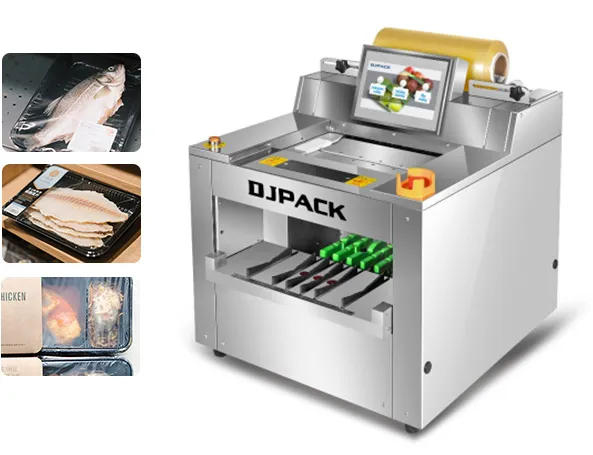
This article explains how different vacuum packaging equipment types address specific supermarket challenges — from the meat counter to the central kitchen — and what factors to consider before investing.
Four Key Areas Where Vacuum Packaging Transforms Supermarket Operations
Supermarkets handle multiple fresh food categories, each with different spoilage mechanisms. The table below shows how vacuum packaging equipment solves each challenge.
| Department | Primary Spoilage Cause | How Vacuum Packaging Helps | Typical Equipment Used |
|---|---|---|---|
| Meat & Poultry | Oxygen exposure turns red meat brown; surface bacteria grow | Removes oxygen, maintains color for 7–10 days longer; reduces purge | Double‑chamber vacuum sealer, tray sealer with MAP |
| Seafood | Rapid bacterial growth; strong odors; moisture loss | Seals in freshness, prevents cross‑odor, and extends shelf life by 3–5 days | Single‑chamber or double‑chamber with a gentle vacuum setting |
| Deli & Cheese | Surface drying; mold growth on cut surfaces | Prevents dehydration; vacuum skin packaging eliminates air pockets | Vacuum skin packer or chamber sealer with bag |
| Prepared Foods | Short ambient shelf life; sauce leakage | Enables sous‑vide and portion‑controlled meals; no leak‑through | Tray sealer or continuous belt sealer |
Practical benefit for store managers:
-
Longer display life means fewer markdowns and less unsold inventory.
-
Vacuum‑packaged products can be rotated from the back‑room prep area to the sales floor with a consistent appearance.
-
Reduced purge in meat trays keeps packaging cleaner and increases customer satisfaction.
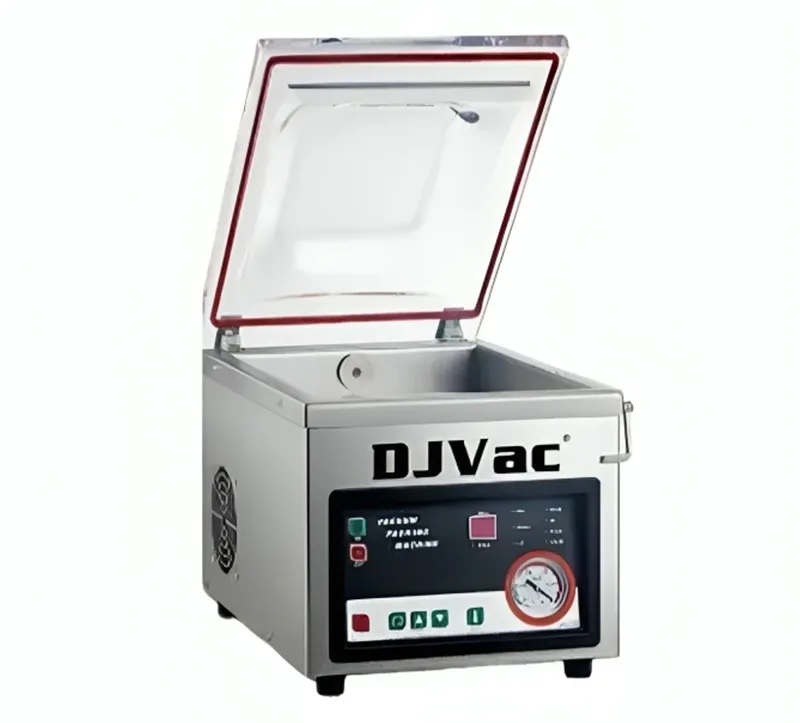
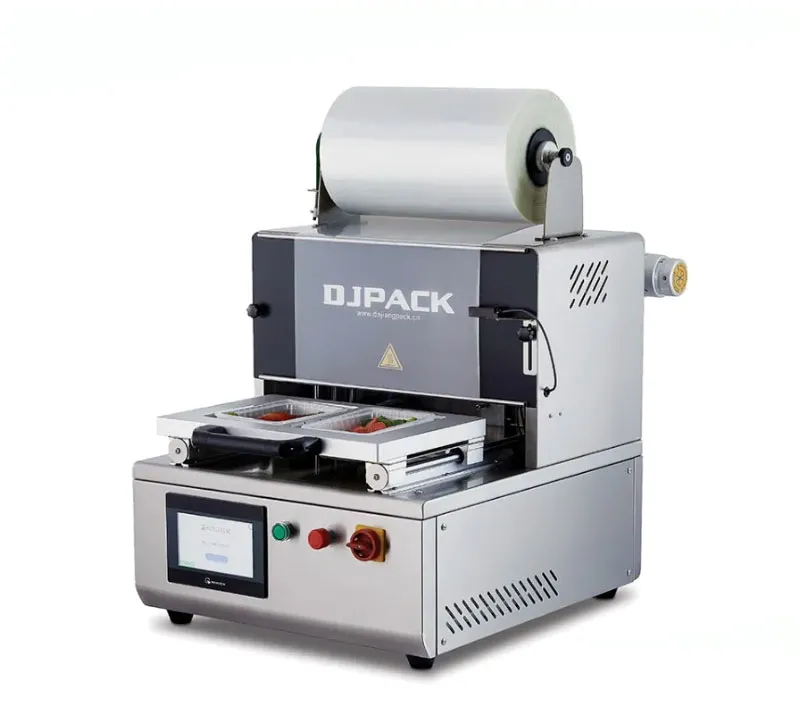
To see how different machine capacities match store volume — from a single meat counter to a central kitchen — explore our range of vacuum packaging equipment designed for retail and food service applications.
Comparing In‑Store vs. Centralized Packaging Models
Supermarkets can handle vacuum packaging either in the back room of each store or at a central distribution center. Each model has distinct operational trade‑offs.
| Decision Factor | In‑Store (Decentralized) | Centralized (Commissary) |
|---|---|---|
| Equipment location | One or two machines per store | High‑capacity line at one facility |
| Typical weekly volume per location | 500 – 2,000 packs | 10,000 – 50,000+ packs total |
| Labor requirement | Store‑level staff trained on simple operation | Dedicated packaging technicians |
| Product freshness at sale | Packaged within 24 hours of display | May be packaged 3–7 days before sale |
| Capital investment | Lower per store, but multiplied by number of stores | Higher up‑front, but lower per‑unit cost |
| Best suited for | High‑traffic stores with variable demand | Standardized product lines across many stores |
Which model fits your chain?
-
If you operate fewer than five stores or have highly variable product mixes (e.g., each store cuts meat differently), in‑store packaging offers flexibility and fresher display.
-
If you have ten or more stores and want consistent portion sizes, branded packaging, and centralized quality control, centralized vacuum packaging is usually more cost‑effective.
The U.S. Department of Agriculture (USDA) Food Safety and Inspection Service notes that vacuum packaging can extend the shelf life of fresh meats, but emphasizes that temperature control remains critical because anaerobic bacteria may grow if products are stored above 40°F (4°C). Supermarkets adopting vacuum packaging must ensure their cold chain — from packaging room to retail case — is maintained consistently.
Five Factors Supermarkets Should Evaluate Before Investing
Before purchasing any vacuum packaging equipment, assess these five operational realities.
Factor 1: Product mix and volume per store
-
Count the number of SKUs that would benefit from vacuum packaging (fresh meat cuts, whole fish, cheese wheels, deli meats).
-
Why it matters: A machine that works well for 200 packs/day of ground beef may be too slow if you also need to package 300 chicken portions daily. Double‑chamber machines typically handle mixed volumes better.
Factor 2: Available back‑room space and utilities
-
Measure the floor area where the machine will sit. Chamber machines require clearance for lid opening.
-
Check electrical supply: Most supermarket back‑rooms have 110V single‑phase outlets suitable for tabletop chamber sealers. Larger automatic units need 220V or three‑phase.
-
Why it matters: A machine that requires electrical upgrades or compressed air (for tray sealers) can add unexpected installation costs.
Factor 3: Cleaning and sanitation workflow
-
Will the same machine package raw meat and then cooked deli products? If yes, quick‑release seal bars and easy‑access chambers are essential.
-
Why it matters: Cross‑contamination risk is real. A machine that takes 30 minutes to disassemble and sanitize may be skipped by busy staff, leading to food safety violations.
Factor 4: Staff training and turnover
-
How many different employees will operate the machine? Is the interface intuitive with presets for different products?
-
Why it matters: Complex machines with many manual adjustments cause inconsistent seals. Look for one‑button programs for “meat,” “fish,” and “dry goods.”
Factor 5: Return on investment calculation
-
Calculate current shrink (spoilage) for fresh departments. Many supermarkets report 3–8% waste on meat and seafood.
-
Estimate the shelf‑life extension from vacuum packaging (typically 2–3x longer). Then compute reduced markdowns.
-
Example: If a store discards $200 of ground beef weekly due to browning, and vacuum packaging cuts that loss by 70%, annual savings = $200 × 52 × 0.7 = $7,280 — which can pay for a double‑chamber machine within one year.
For a detailed breakdown of how to calculate packaging equipment ROI based on your store’s specific waste data, refer to our solutions section with industry application examples.
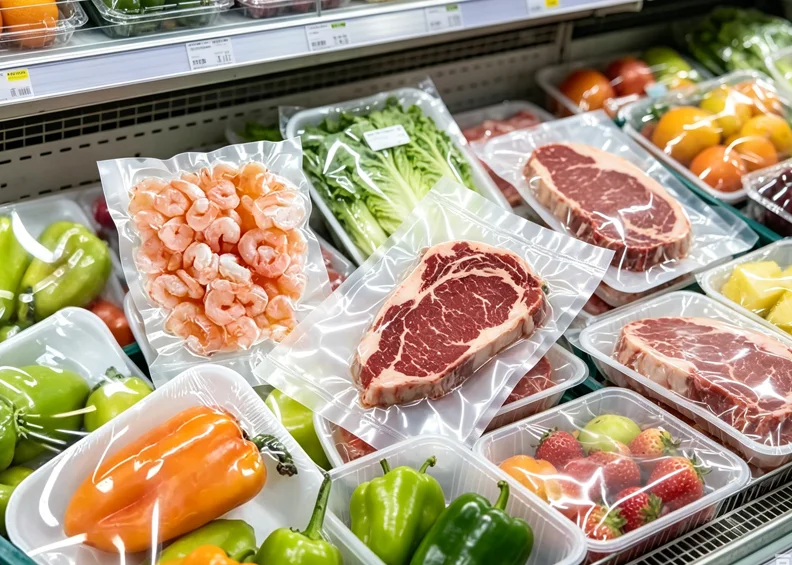
Real‑World Example — How a Regional Supermarket Chain Reduced Meat Waste
Consider a supermarket chain with 12 locations, each selling an average of 400 lb of fresh beef and pork daily. Previously, meat cut in the morning was wrapped in traditional foam trays with overwrap film. By 8 PM, much of the beef had turned dark brown, leading to markdowns or discard.
The chain introduced in‑store double chamber vacuum sealers for two applications:
-
Primal cuts (whole tenderloins, ribeyes) were vacuum‑packaged immediately after breaking down carcasses. These were stored in back‑room coolers and cut to order, reducing waste from unsold bulk cuts by 40%.
-
Family‑size bulk packs (2–3 lb ground meat, stew chunks) were vacuum‑sealed in bags and displayed in a dedicated “vacuum‑packed” section. Customers appreciated the longer fridge life at home, and the store reduced markdowns on these items by 65%.
Key lessons from this example:
-
Not every product needs vacuum packaging. High‑turnover items like single pork chops may still use traditional wrap.
-
Staff training on bag placement and seal times was critical. The chain created simple picture guides for each product category.
-
The equipment paid for itself in 11 months through reduced waste and higher customer satisfaction scores.
Next Steps — From Decision Framework to Equipment Selection
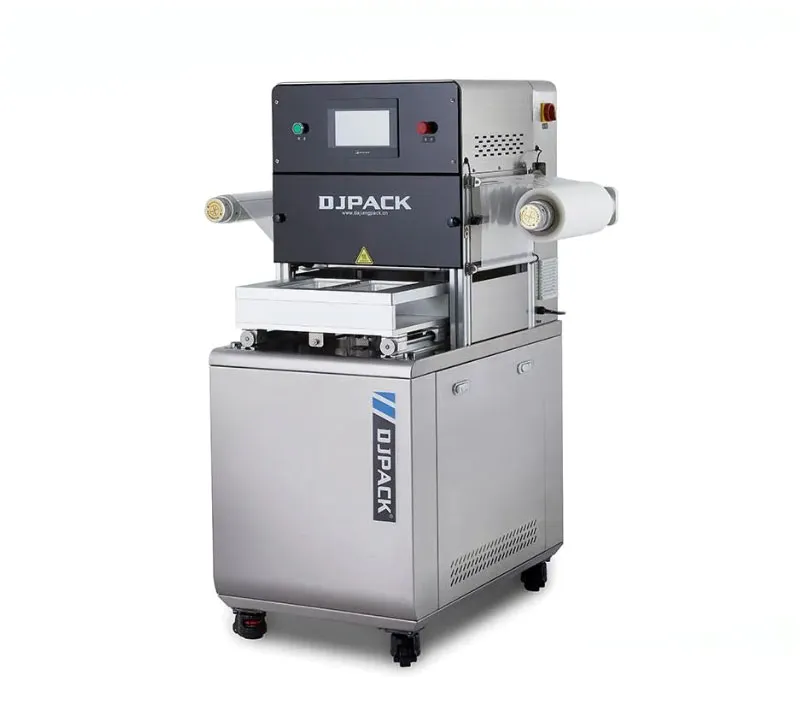
You have now identified which supermarket departments would benefit most from vacuum packaging, compared decentralized vs. centralized models, and evaluated your store’s volume and space constraints. The next logical step is to match these requirements to specific machine classes: single‑chamber for low‑volume deli items, double‑chamber for busy meat counters, or tray sealers if you want retail‑ready MAP packaging for prepared meals.
Once you narrow down the machine type, compare seal bar length (must fit your largest package), pump size (m³/h for cycle speed), and material construction (304 stainless steel for washdown environments). These specifications directly impact daily throughput and cleaning ease.
Related Reading
-
Modified Atmosphere Packaging (MAP) for Retail Meat and Produce
-
Centralized vs In‑Store Meat Packaging: A Cost Comparison for Supermarkets
-
Vacuum Skin Packaging for Deli and Cheese Counters
-
Food Safety Considerations for Vacuum‑Packaged Fresh Products
-
Training Your Meat Department Staff on Vacuum Sealer Operation





 English
 Pусский