
You have a product that needs protection from air, moisture, and spoilage. But when you start looking at vacuum packaging equipment, you face chamber machines, double-chamber units, continuous belt sealers, tray sealers with gas flush, and skin packers. Each type promises longer shelf life—but which one actually works for your daily volume, product shape, and operating environment?
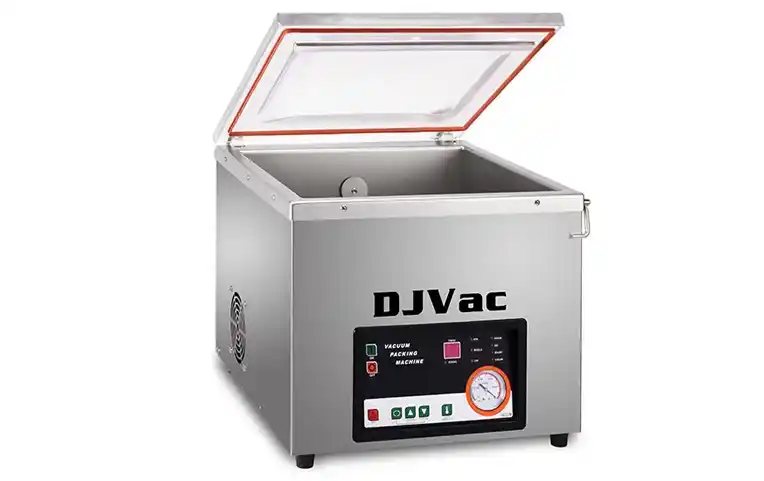
This guide provides a decision framework that separates marketing claims from operational realities. You will learn how to match equipment specifications to your actual production constraints, without needing to become an engineering expert.
Six Core Decision Factors That Determine Equipment Fit
Every vacuum packaging machine is defined by how it handles these six variables. Use them as your checklist when evaluating any solution.
| Decision Factor | What It Means | Why It Matters to Your Business |
|---|---|---|
| Chamber size/seal bar length | Maximum product dimensions the machine can accept. | A 400mm seal bar cannot close a 450mm bag. Measure your largest product + 50mm margin. |
| Cycle speed | Number of cycles or packs per minute. | 2 cycles/min on a chamber machine equals ~120 packs/hour. If you need 500 packs/hour, you need double-chamber or automatic feed. |
| Vacuum pump capacity (m³/h) | How fast and how deeply the machine removes air. | A 20 m³/h pump takes longer to reach the same vacuum level than a 40 m³/h pump. For wet or soft products, faster evacuation prevents purge and deformation. |
| Sealing system | Single seal bar, double seal, or serrated/cut-off sealing. | Double seal provides redundancy for liquid-prone products. Serrated bars improve grip on wet surfaces. |
| Material construction | Stainless steel vs. painted steel; food-grade vs. industrial. | For daily washdown in meat or seafood processing, 304 stainless steel is non-negotiable. Painted steel rusts within months. |
| Gas flush capability | Ability to inject nitrogen/CO₂ mixture before sealing. | For fresh produce, bakery, or red meat, modified atmosphere (MAP) extends shelf life 2–3x longer than standard vacuum alone. |
To see how these factors translate into specific chamber dimensions and pump capacities, explore the equipment configurations outlined in our product overview for vacuum packaging machinery.
Technology Comparison – Which Machine Architecture Fits Your Workflow?
Not all vacuum packaging equipment works the same way. Below is a side‑by‑side comparison of the most common architectures used in food processing.
| Architecture | Typical Cycle Speed | Best Suited For | Key Limitation |
|---|---|---|---|
| Single‑chamber vacuum sealer | 1–3 cycles/min | Small butcher shops, test kitchens, R&D labs, low-volume specialty foods | Too slow for production runs above 200 packs/day |
| Double‑chamber vacuum sealer | 3–6 cycles/min | Medium-volume meat processors, cheese producers, frozen food packers | Requires operator to load/unload each cycle |
| Continuous/automatic belt vacuum sealer | 8–20 packs/min | High-volume industrial lines (e.g., meat processing plants, large seafood packers) | Higher initial investment; floor space required |
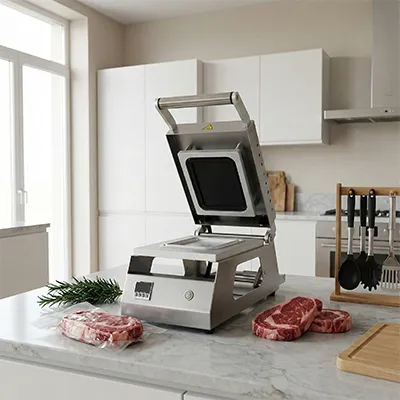
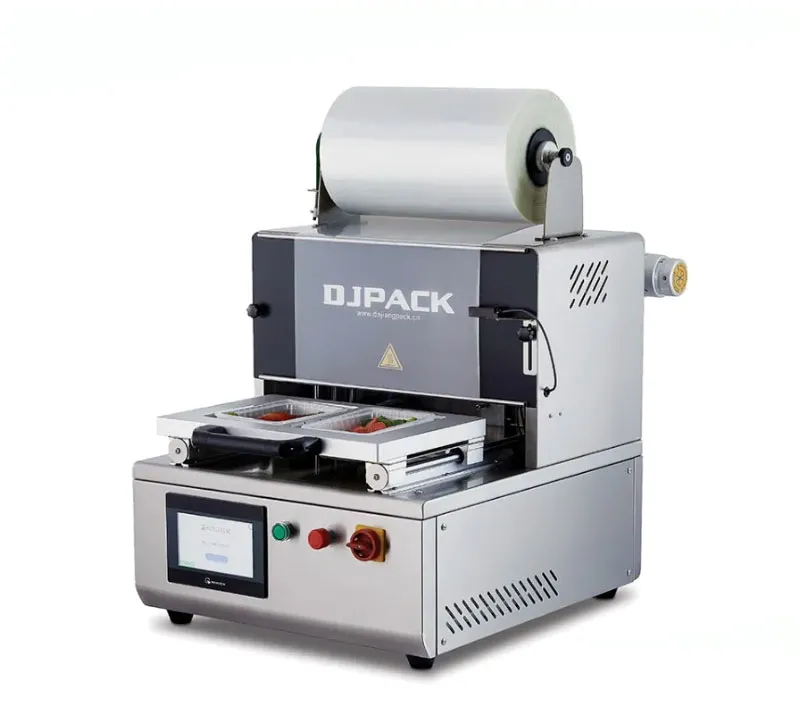
| Tray sealer with MAP | 5–15 trays/min (semi-auto) to 40+ trays/min (auto) | Retail-ready trays for meat, produce, ready meals | Tray and film cost higher than bags; gas mixing requires calibration |
| Vacuum skin packer | 3–8 cycles/min | Bone‑in meat, premium retail display, oxygen‑sensitive cheese | Slower than MAP for identical tray count; film is proprietary |
How to use this table:
-
If your daily output is under 400 packs → start with a single‑chamber or double‑chamber machine.
-
If you already use pre‑formed trays and want retail-ready presentation → look at tray sealers (with or without gas flush).
-
If you produce bone‑in pork chops or lamb ribs that puncture standard bags → vacuum skin packaging is the practical answer.
External reference (real, verifiable):
Achieving effective vacuum packaging requires consistently low residual oxygen levels. According to a review published in the Journal of Animal Science and Technology (Koch et al., 2009), the shelf life of vacuum‑packaged meat is preferentially influenced by factors including storage temperature, meat cut size, initial microbial levels, and the oxygen permeability of packaging material, which directly relates to the vacuum equipment’s ability to remove air and maintain seal integrity.
Five Practical Steps to Assess Your Own Equipment Requirements
Instead of starting with machine brands, start with your product and process. Follow these five steps to create a requirement document that fits any supplier evaluation.
Step 1: Characterize your product dimensions and sensitivity
-
Measure length, width, height of your largest and smallest product.
-
Note whether it is dry (spices, nuts), wet (fresh meat, marinated poultry), or liquid (sauces, soups).
-
Why it matters: Wet products require wider sealing bars and liquid‑resistant vacuum pumps. Dry powders need antistatic or dust‑filter options.
Step 2: Calculate your peak daily pack volume
-
Count average packs per day, and also maximum during a promotion or harvest season.
-
Why it matters: A machine that handles 500 packs/day at 8 hours can fail when you suddenly need 800 packs/day. Add 30% safety margin.
Step 3: Decide on bag vs tray vs skin format
-
If you already have a bagging station → chamber, or continuous vacuum sealer.
-
If you want direct retail trays → tray sealer (MAP optional).
-
If you want premium no‑purge presentation → skin packaging.
-
Why it matters: Switching formats later requires new tooling and film supply contracts. Choose a platform that matches your market channel.
Step 4: Map your facility’s electrical and air supply
-
Most chamber machines run on single‑phase 110V/220V. Large continuous sealers and automatic tray sealers require three‑phase power and compressed air (6–8 bar).
-
Why it matters: Upgrading electrical panels or installing a new compressor can add weeks and thousands of dollars to your project.
Step 5: Define your cleaning procedure
-
Will the machine be cleaned after each shift? With hose washdown? With foaming sanitizer?
-
Why it matters: Machines with removable sealing dies, sloped surfaces, and IP66‑rated controls are designed for washdown. Standard industrial machines will short out or rust if hosed directly.
For a deeper look at how production volume and product type influence equipment layout, review our solutions section for customized packaging lines.
Real‑World Scenarios – What Different Operations Actually Need
Scenario 1: A farm‑to‑table beef processor packaging 300–500 subprimal cuts per day
-
Key requirements: Large chamber (to fit whole striploins), double seal bar (to handle wet surfaces from aging bags), easy cleanout for fat/juice residue.
-
Recommended architecture: Double‑chamber vacuum sealer with 40 m³/h pump and stainless steel construction.
-
Critical spec to verify: Chamber depth ≥ 200mm to accommodate vacuum bag bulging.
Scenario 2: A central kitchen delivering 2,000 vacuum‑packed prepared meals per day (sous‑vide style)
-
Key requirements: Consistent vacuum level for precise sous‑vide cooking, fast cycle time, ability to handle semi‑liquid sauces.
-
Recommended architecture: Automatic belt vacuum sealer or dual‑chamber indexing machine.
-
Critical spec to verify: Vacuum sensor that triggers seal only when target pressure is reached – not just after a fixed time.
Scenario 3: A seafood smokehouse packaging 150–200 packs of smoked salmon per day, using both flat bags and stand‑up pouches
-
Key requirements: Versatile seal bar that accommodates different bag widths, gentle vacuum ramp to avoid crushing delicate fillets.
-
Recommended architecture: Tabletop single‑chamber vacuum sealer with programmable vacuum speed settings.
-
Critical spec to verify: “Gentle” or “soft air” mode to prevent liquid draw‑up into the vacuum pump.
Next Step – From This Decision Guide to Equipment Comparison
You have now clarified your product dimensions, daily volume, format preference (bag/tray/skin), and facility constraints. With this profile, you are ready to compare specific machine specifications without being overwhelmed by marketing brochures.
The next logical step is to examine how different machine classes – entry‑level chamber sealers versus industrial continuous systems – differ in seal bar durability, pump maintenance intervals, and total cost of ownership over three years.
Related Reading
-
Modified Atmosphere Packaging (MAP) for Produce & Bakery
-
Hygienic Design Standards for Food Packaging Machinery
-
Single‑Chamber vs Double‑Chamber Vacuum Sealers: A Cost‑Benefit Analysis
-
Troubleshooting Common Seal Failures in Wet Products





 English
 Pусский