
Fresh meat is one of the most perishable food products. Within days—or even hours—of exposure to oxygen, color fades from bright red to dull brown, surface bacteria multiply, and moisture escapes as unsightly “purge” in the tray. For retailers, butchers, and food processors, this isn’t just a quality issue; it directly impacts profit margins and food safety compliance.
This guide provides a decision framework based on meat type, production volume, and industry hygiene standards. You will learn how different packaging technologies address oxygen, moisture, and microbial growth—and which approach fits your specific fresh meat application.
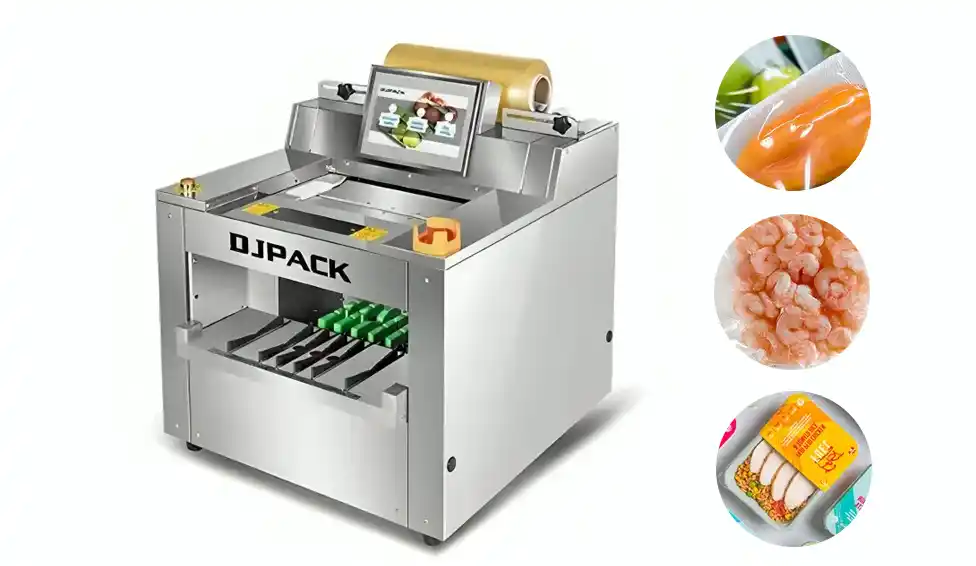
Three Core Packaging Technologies for Fresh Meat: How They Work & When to Use Each
Different fresh meat products require different preservation strategies. According to a technical bulletin from the USDA Food Safety and Inspection Service (FSIS) , the primary factors controlling meat spoilage are oxygen exposure, temperature, and moisture management. Packaging directly influences all three.
Below is a comparison of the three dominant technologies used for fresh meat today.
| Technology | How It Works | Best For | Key Limitation |
|---|---|---|---|
| Vacuum Packaging (VP) | Removes air entirely; seals meat in a tight bag. | Primal/subprimal cuts (large wholesale portions); frozen meat. | Can cause “purge” (moisture loss); darkens color due to deoxymyoglobin. |
| Modified Atmosphere Packaging (MAP) | Flushes tray with specific gas mix (e.g., 70-80% O₂ for red meat, 60-70% CO₂ for pork/poultry). | Retail-ready trays; ground meat; marinated cuts. | Requires high-quality film; higher material cost; not suitable for all product shapes. |
| Vacuum Skin Packaging (VSP) | Tightly adheres flexible film directly onto meat surface and tray. | Bone-in cuts (pork chops, lamb ribs); high-end retail display. | Slower cycle speeds; film costs higher than standard vacuum bags. |
What does this mean for your operation?
-
If you primarily sell whole tenderloins or large subprimal cuts to other businesses, traditional vacuum packaging is likely the most efficient and cost-effective method.
-
If you run a retail meat case and need bright red color to attract consumers, a MAP system with elevated oxygen levels is the industry standard.
-
If you want premium presentation for bone-in steaks or lamb chops while eliminating purge completely, VSP offers the best solution.
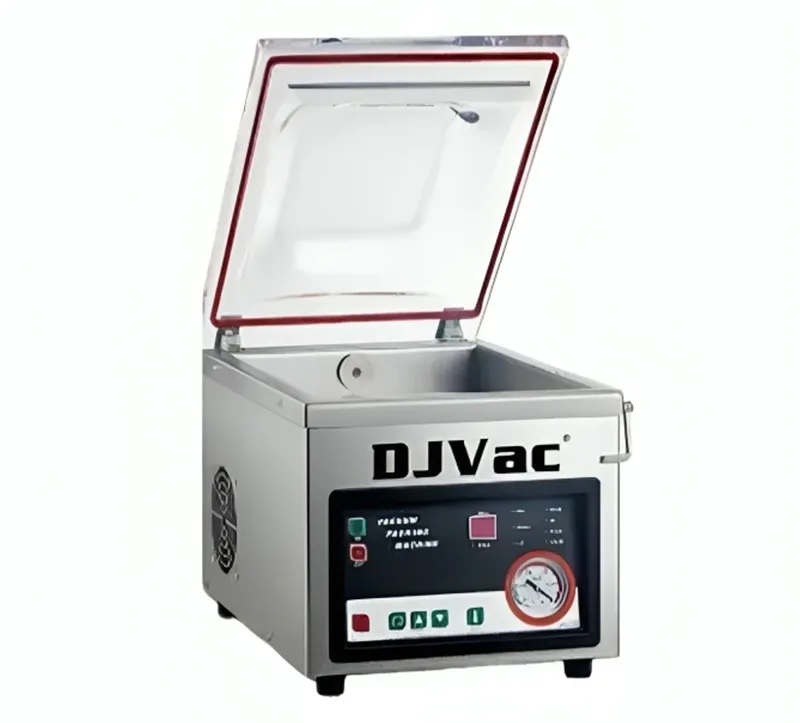
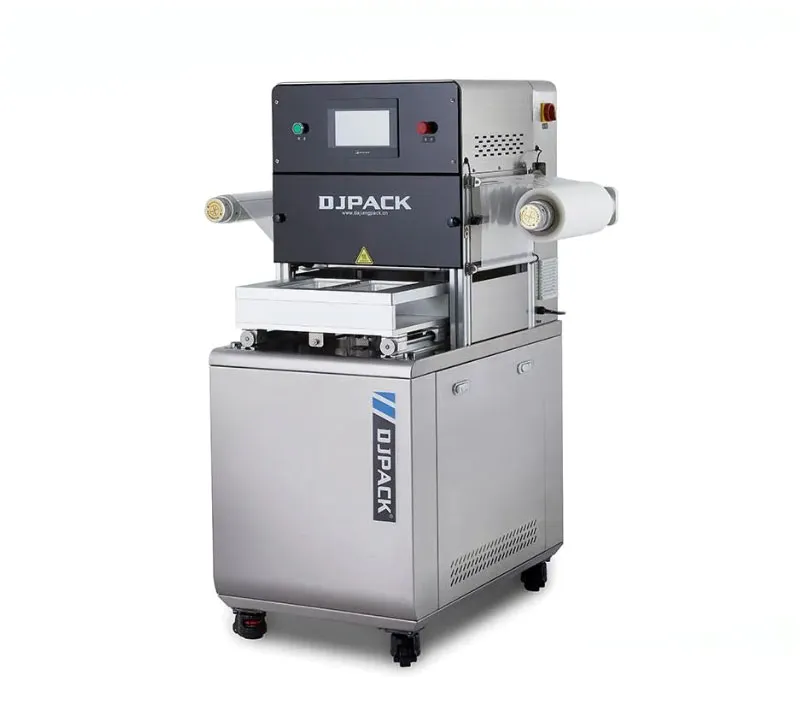
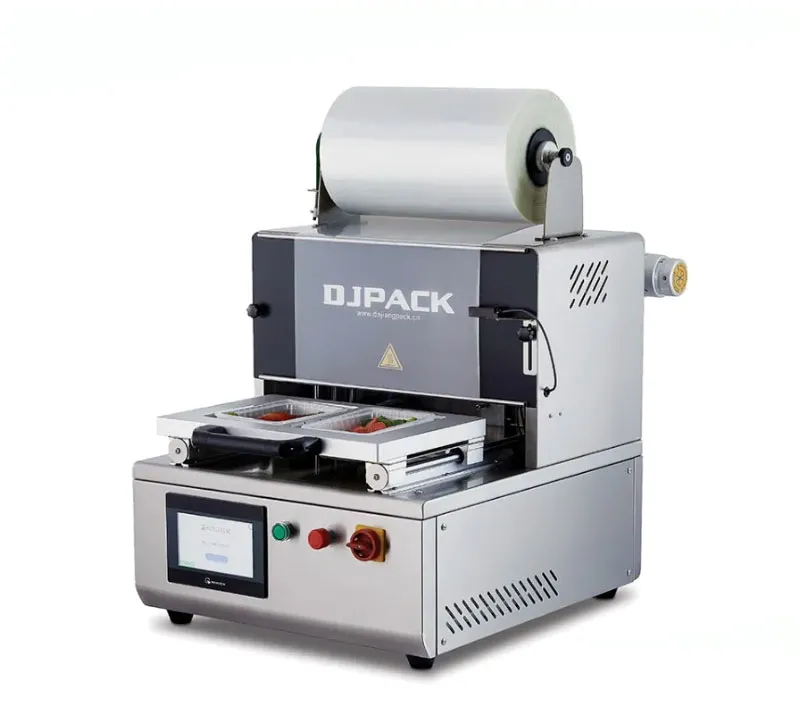
To understand how different machine platforms accommodate these technologies, see the design approaches used in our multi-functional tray sealing and vacuum packaging series for various fresh meat applications.
Five Critical Decision Factors for Fresh Meat Packaging Equipment
Choosing equipment isn’t just about the technology name. The following five factors will determine whether your packaging line delivers consistent results.
1. Oxygen Transmission Rate (OTR) Control
Fresh meat requires different OTR levels depending on the technology. For MAP red meat, you need high OTR film to allow oxygen in temporarily. For vacuum skin packaging, you need ultra-low OTR to keep oxygen out completely after sealing.
-
Real-world impact: Using the wrong film barrier on a VP machine can turn fresh beef brown within 48 hours—even if the seal is perfect.
2. Seal Integrity & Contamination Handling
Fresh meat often has natural juices, marinates, or surface moisture. This is the #1 cause of seal failure.
-
What to look for: Machines with wider seal bars, serrated sealing profiles, or liquid detection systems.
-
Real-world impact: A clean, dry seal on a dry product is easy. A reliable seal on a wet or marinated pork chop requires equipment designed for contaminated sealing zones.
3. Cycle Speed & Production Throughput
A butcher shop packaging 200 trays per day has very different needs than a central processing facility packaging 2,000 trays per hour.
-
Low volume (10-500 packs/day): Tabletop chamber vacuum sealers or semi-automatic tray sealers.
-
Medium volume (500-5,000 packs/day): Double-chamber vacuum machines or semi-auto MAP systems.
-
High volume (5,000+ packs/day): Automatic continuous vacuum or rotary tray sealing lines.
4. Hygiene & Sanitary Design
Fresh meat processing requires frequent washdowns. Equipment design directly impacts cleaning time and food safety risk.
-
Key design features: 304 stainless steel construction, rounded corners (no sharp angles where bacteria hide), removable sealing dies, and IP65-rated electrical panels.
-
Real-world impact: A machine that takes 45 minutes to disassemble and clean versus one that takes 10 minutes saves over 200 hours of labor annually.
5. Gas Mix Precision (For MAP Only)
If you choose MAP, the accuracy of your gas mixer determines shelf life consistency. Research published in the Journal of Food Science indicates that a deviation of just ±2% in CO₂ concentration can reduce the shelf life of fresh ground beef by up to 30% due to incomplete suppression of Pseudomonas bacteria.
-
What to look for: Mass flow controllers (not analog rotameters), real-time gas analysis capabilities.
Matching Equipment Approach to Your Fresh Meat Category
Different meat types have different spoilage mechanisms. Here is how to match the technology to the product.
Scenario A: Whole Muscle Red Meat (Beef, Lamb, Venison)
-
Primary concerns: Color stability, purge control, aging potential.
-
Recommended approach: For wet-aging (7-21 days), standard vacuum packaging with high-barrier bags works well. For retail display, high-oxygen MAP (70-80% O₂ + 20-30% CO₂) maintains bloom for 7-10 days.
-
Key equipment capability: Reliable vacuum levels (99%+ air removal) to prevent bone puncture from sharp cuts.
Scenario B: Ground Meat & Patties
-
Primary concerns: Large surface area accelerates oxidation; high risk of microbial growth.
-
Recommended approach: High-CO₂ MAP (60-70% CO₂ + 30-40% N₂, low or no oxygen) to suppress bacteria while preventing color change (ground meat doesn’t need “bloom” like whole cuts).
-
Key equipment capability: Gentle product handling to prevent patty deformation during loading.
Scenario C: Bone-In Cuts (Pork Chops, Lamb Racks, T-Bone Steaks)
-
Primary concerns: Bone edges puncture standard vacuum bags; purge collects around bone.
-
Recommended approach: Vacuum skin packaging (VSP) is the proven solution. The skin film conforms tightly around bones, eliminating air pockets and purge.
-
Key equipment capability: Deep-draw forming ability to cover irregular shapes without tearing.
For a detailed look at how packaging parameters change between bone-in and boneless meat applications, refer to our solutions guide for customized meat packaging lines.
Common Fresh Meat Packaging Mistakes & How to Avoid Them
Even with the right equipment, operational errors can ruin shelf life. Here are three frequent mistakes.
1. Incomplete Air Removal from Bag Corners
-
Why it happens: Chamber is too small for the bag size, or cycle time is too short.
-
How to avoid: Ensure the vacuum chamber has at least 2 inches of clearance around the bag. Run a full vacuum cycle until pressure stabilizes below 10 mbar.
2. Using Standard Film for High-CO₂ MAP
-
Why it happens: CO₂ is more permeable than nitrogen through many standard films.
-
How to avoid: Specify EVOH (ethylene vinyl alcohol) barrier layers or laminated films specifically rated for CO₂-rich environments. A 2023 guideline from the European Flexible Packaging Association notes that gas loss of just 2% per day from poor barrier film can reduce MAP shelf life by over 40%.
3. Ignoring Temperature Fluctuations Post-Packaging
-
Why it happens: Packaged meat sits on a loading dock or during transport before reaching a cooler.
-
How to avoid: Implement temperature monitoring from sealing to cold storage. Every hour above 4°C cuts shelf life by approximately one day, according to refrigerated logistics data from the Global Cold Chain Alliance.
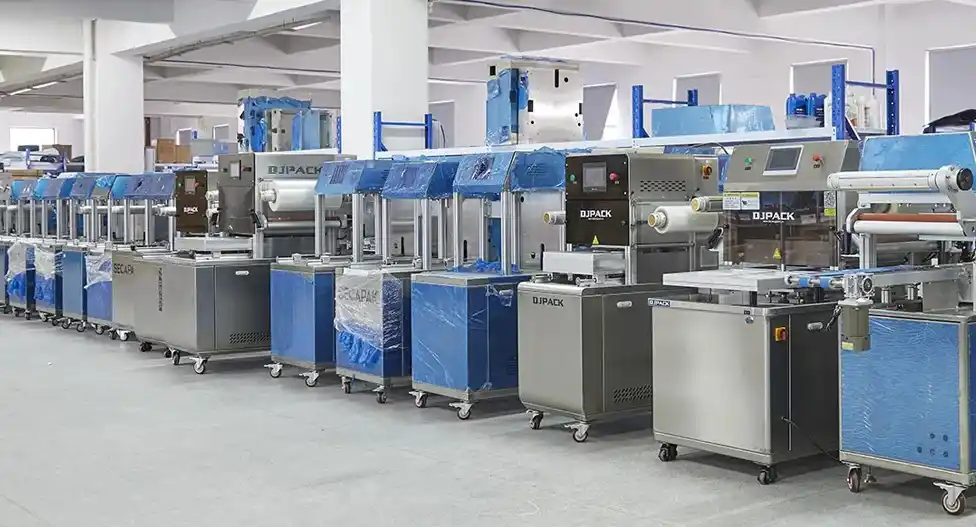
From Decision Framework to Equipment Evaluation
By now, you have clarified several key variables: your primary fresh meat categories (bone-in vs. ground vs. whole muscle), your daily packaging volume, and your hygiene requirements. The next logical step is to compare specific machine capacities—chamber size, seal bar length, cycle speed—against your production floor layout and labor availability.
For operations that require integrated gas flushing (MAP) or skin film forming (VSP), examining the engineering differences between semi-automatic and fully automatic platforms will help you match capital investment to throughput needs.
Related Reading
-
Vacuum Packaging Equipment Solution for Meal Prep
-
How Modified Atmosphere Packaging Extends Shelf Life for Seafood & Poultry
-
Hygienic Design Standards for Food Packaging Machinery: What to Look For
-
Understanding Oxygen Transmission Rate (OTR) in Fresh Meat Films
-
Comparing Single-Chamber vs. Double-Chamber Vacuum Sealers for Butcher Shops





 English
 Pусский