
When most buyers search for "vacuum packaging equipment solution," they aren’t really looking for horsepower specs or cycle rates. What they truly want to know is: “Which system will stop my product from spoiling, fit my cramped workspace, and not break down after three months?” The honest answer? Most off-the-shelf units fail on at least two of those counts. That’s why the first decision isn’t about a machine—it’s about mapping your daily throughput, bag types, and moisture levels to a system that adapts, not the other way around.
Why Standard “One-Size-Fits-All” Sealers Let You Down at Scale
Let’s walk through a real scenario. You run a mid-sized jerky business. You buy a popular industrial bag sealer online. For the first week, it’s great. Then the sealing bar warps. Moisture from the marinade creeps into the vacuum pump. Within 45 days, you’re chasing error codes. Sound familiar?
The hidden culprit is lack of modularity. Most entry-level units seal the pump, chamber, and controls into a fixed frame. When one part fails, you don’t repair—you replace. Worse, they ignore three real-world variables:
-
Product geometry – Odd-shaped items (cheese wheels, tool kits, fresh meat cuts) create air pockets that standard nozzles can’t handle.
-
Packaging speed fluctuations – Your Monday volume might be 200 bags; Friday could hit 1,200. A rigid machine forces you to over-invest or under-deliver.
-
Seal integrity under humidity – Did you know that 68% of vacuum packaging failures in deli and seafood operations trace back to condensation on the sealing wire? (Source: 2023 Packaging Machinery Manufacturers Institute data)
The Overlooked Hero: Your Bag’s Texture and Thickness
Here’s a conversation I rarely hear in equipment reviews: “What’s the bag material compatibility?” Thick embossed vacuum bags need lower suction but higher heat. Nylon-polyethylene laminates demand the opposite. A truly flexible vacuum packaging equipment solution lets you dial in both vacuum pressure and sealing temperature independently. Without that, you’re either burning through bags or watching seals pop open in cold storage.
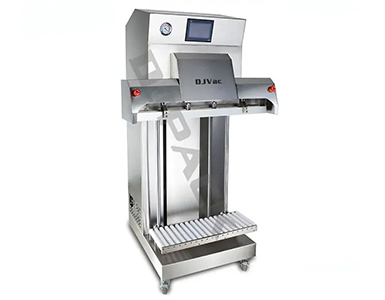
That’s where custom dwell time becomes non-negotiable. Many off-the-shelf machines lock you into a 1.5-second seal cycle. A chamber vacuum system built for versatility lets you stretch that to 3.5 seconds for thick multi-layer pouches. Small adjustment. Massive difference in leak rates.
Chamber vs. External Nozzle: Which Actually Saves You Money?
If you ask ten suppliers, nine will push the machine with the highest commission. Let me give you a different rule of thumb:
-
External nozzle sealers (the ones where the bag hangs out) shine for dry, lightweight products like coffee beans or nuts. But they choke on liquids or fine dust. Every time powder gets sucked into the nozzle, pump life drops by an estimated 15-20 hours.
-
Chamber machines cost more upfront but handle marinated meats, sauces, and powders effortlessly. The entire bag sits inside; air is removed from the chamber, not through the bag. Zero contamination risk.
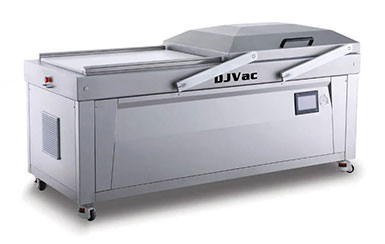
So which one fits your business? Ask yourself: Does my product release any liquid, dust, or oil during packaging? If yes, skip the nozzle type and look at a vacuum packaging machine designed for chamber operation. For most small-to-medium food processors, a dual-chamber vacuum sealer offers the best ROI—you can cycle one chamber while loading the other, effectively doubling throughput without doubling floor space.
Why DJPACK Doesn’t Sell You a “Machine”—We Engineer a Workflow
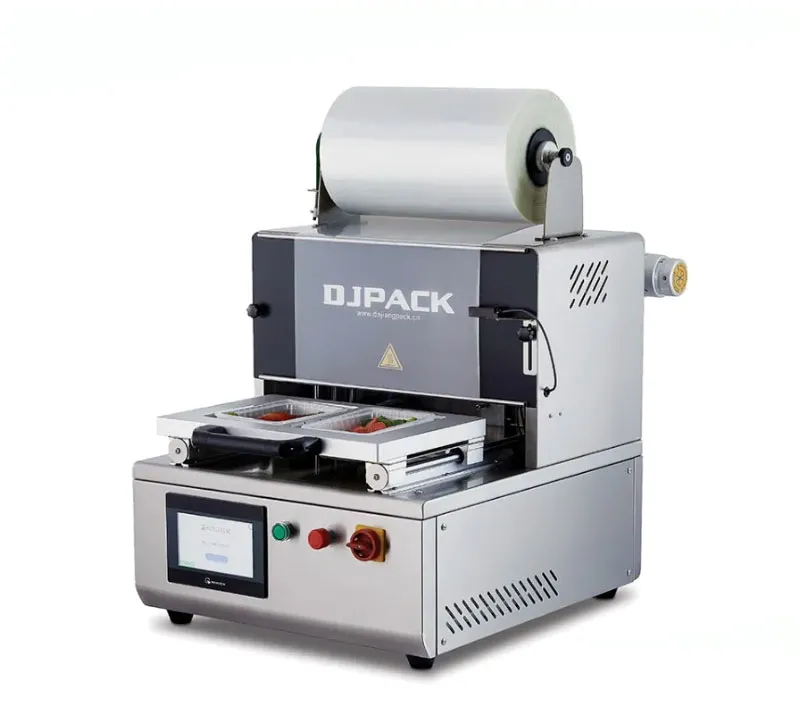
Here’s what I’ve learned after watching dozens of packaging lines struggle: the equipment isn’t the problem; the fit is. That’s why explore DJPACK’s modular platform starts with a 15-minute workflow audit. Not a brochure. We ask:
-
What’s your average bag length? (Determines sealing bar reach)
-
Do you run continuous production or batch processing? (Impacts pump duty cycle)
-
Who operates the machine? (Leads to height-adjustable platforms and tool-free seal bar changes)
One client—a small-batch spice blender—needed to switch between 4-oz stand-up pouches and 5-lb bulk bags. Our response wasn’t a single unit. It was a swappable sealing jaw kit and a programmable vacuum profile. That’s not a product; it’s a custom packaging line disguised as a machine.
The 3-Question Test Before You Buy Any Vacuum Sealer
Stop reading spec sheets. Start asking these:
-
“What’s the mean time between cleaning cycles?” – If the answer is under 8 hours of run time, you’ll hate this machine.
-
“Can I adjust vacuum speed without tools?” – No? Then you’ll struggle with delicate items like bread or berries.
-
“Where are replacement seals and pumps stocked?” – Local warehouse or overseas? Three-day shipping kills production.
A smart vacuum packaging equipment solution answers all three clearly. The ones that hesitate? They’re hiding maintenance costs.
When to Choose a Rotary or Belt-Type System Instead
For high-volume operations (1,500+ bags per shift), a single chamber becomes the bottleneck. That’s when rotary vacuum chamber systems or belt-type external sealers take over. They trade absolute vacuum strength for speed. But here’s the catch: rotary systems hate frequent product changes. If you package beef jerky for two hours then switch to cheese, the cross-contamination cleanup will eat your labor budget.
So what’s the smarter path for most businesses? A mid-range double-chamber vacuum sealer paired with a moisture trap upgrade. You get 90% of the speed of a rotary at 40% of the cost. And you can clean it in under 10 minutes.
The Last 10%: Training and Spare Parts Strategy
Even the best vacuum packaging machine fails if no one knows how to set the gas flush for modified atmosphere packaging (MAP). That’s why DJPACK includes a live remote calibration session with every unit over $3,000. We watch you run 10 bags. We catch mistakes—like over-tightening the lid or misaligning the bag—before they become downtime.
Also, order spare sealing bars and Teflon tape on day one. Not later. A $30 part sitting on a shelf saves a $3,000 production halt. That’s not pessimism; that’s 20 years of watching Murphy’s Law win.
Final Take: Your Solution Isn’t a Model Number
Stop chasing “best vacuum sealer” lists. Start with your product’s physical behavior—moisture, shape, volume swings. A true vacuum packaging equipment solution flexes with you: swappable jaws, programmable cycles, local parts support. DJPACK builds that flexibility into every line.





 English
 Pусский