
Does it actually pay for itself? That’s the question running through every purchaser’s mind before signing off on a Vacuum Packaging Equipment investment. Here’s the honest answer: According to the USDA, food waste accounts for 30 to 40 per cent of the entire food supply in the U.S., and commercial kitchens that adopt vacuum technology typically recover their initial investment within 5 to 7 weeks through reduced spoilage alone. That’s not marketing hype — that’s math. But there’s more to the story than just ROI. What you really need to know are the less-obvious facts that separate game-changing systems from expensive paperweights.
Fact 1: The Market Shift Isn’t Coming — It’s Already Here
Let’s talk numbers for a moment. The global commercial vacuum packaging machine market was valued at US$ 591 million in 2024 and is projected to reach US$ 772 million by 2031, growing at a steady CAGR of 3.9%. North America alone accounts for nearly US$ 1 billion in annual sales. What’s driving this surge? It’s not just big meat processors anymore. Small-to-mid-sized restaurants, independent bakeries, and even seafood distributors are jumping in because the economics finally make sense at their scale.
The shift is also geographical. Zhejiang province, particularly Wenzhou, has emerged as a hub for food-safe packaging systems, with tightly integrated networks of precision engineers and automation specialists. This ecosystem supports rapid prototyping, consistent quality control, and export-ready logistics that simply weren’t available a decade ago. You’re no longer forced to choose between Western premium pricing and Eastern quality uncertainty — the middle ground has matured significantly.
Fact 2: Food Waste Is Bleeding Your Bottom Line — Whether You See It or Not
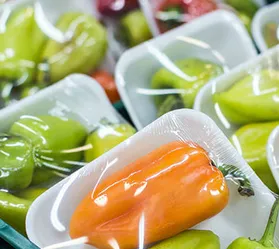
Here’s a number that should make any food business owner uncomfortable: roughly one-quarter of all meat and one-third of seafood products are lost or wasted annually, much of it due to microbial spoilage occurring across the supply chain. Research from KAUST demonstrated that combining UV treatment with vacuum sealing extended strawberry shelf life by an astonishing 124.4 per cent compared to single treatments.
For animal proteins, the improvement was still dramatic — 67 per cent extended shelf life beyond single methods. But here’s what those academic numbers mean in a real kitchen: batch-prepared sous vide proteins stored under oxygen-free conditions remain service-ready for 2 to 3 weeks instead of 3 to 5 days. That’s the difference between tossing expensive beef tenderloin every Friday and stretching inventory across two full menu cycles.
The Flexible Packaging Association found that vacuum-sealed meat stays fresh up to 300 per cent longer than traditionally packaged counterparts. One catering operator I spoke with last year cut weekly spoilage costs by nearly $300 after switching to a chamber system — the machine paid for itself in just over a month. If that doesn’t grab a restaurant owner’s attention, nothing will.
Fact 3: Not All Vacuum Systems Are Created Equal — Here’s the Real Difference
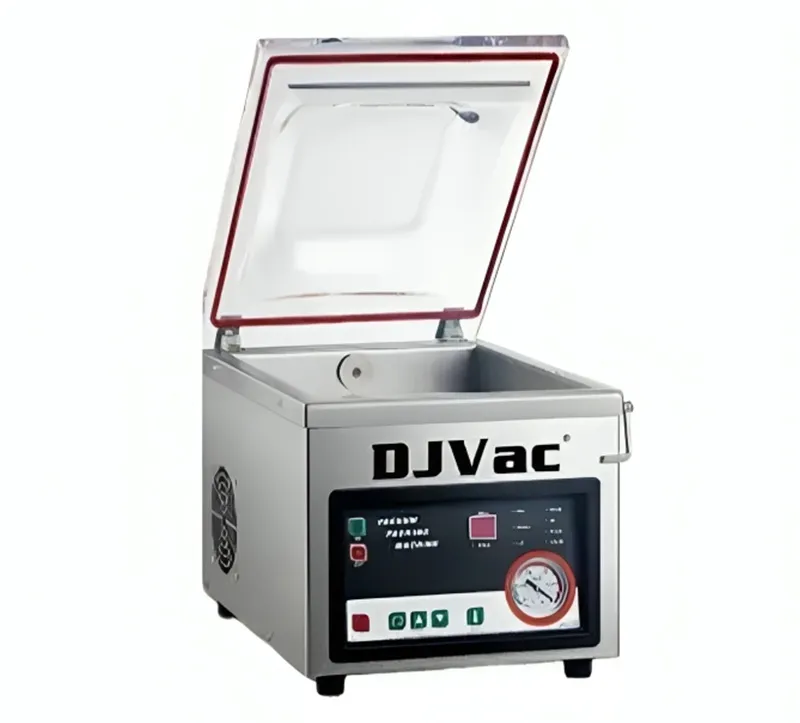
This is where most buyers get tripped up. External vacuum sealers work by sucking air directly from the bag opening — they’re compact, affordable (typically $50 to $300), and fine for occasional home use. But they choke on liquids, struggle with moist foods, and require special textured bags with embossed channels to draw air properly. Use a smooth bag in an external sealer? The machine simply won’t vacuum at all.
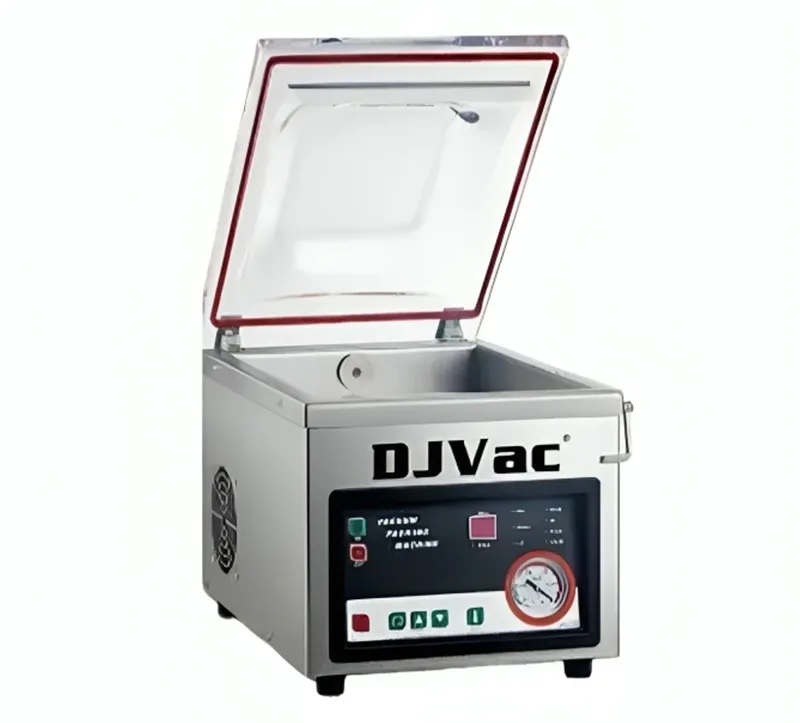
Chamber machines tell a completely different story. The entire product — bag and all — sits inside a sealed chamber, and the system evacuates air from both the chamber and the bag simultaneously. This means you can seal liquids, marinades, sauces, and wet proteins without mess or failure. Chamber units typically pull vacuum down to 5 mbar — consistently, cycle after cycle — while external sealers leave wiggle room that allows oxidation to creep back in.
Which one is right for you? A small cafe running 50 sous vide portions weekly can probably get by with a quality external unit. A butcher shop sealing 500 pounds of marinated poultry every two days needs a chamber machine, period. The external unit’s bag costs alone will eat you alive — textured bags run significantly more expensive than standard smooth pouches, and chamber machines pay that difference back through cheaper consumables.
Fact 4: Real-World Results Don’t Lie — Industry Leaders Prove the Model
Let’s look at who’s already doing this right. Sealed Air’s CRYOVAC brand recently installed its 4,000th rotary vacuum chamber system, marking over 50 years of technology that “revolutionised food packaging” and “redefined efficiency, safety and product integrity”. That’s half a century of continuous refinement, not a flash-in-the-pan trend.
Closer to the ground, consider what AMPC developed for Australia’s meat industry: a patented “Grow with Demand” vacuum packaging machine that requires minimal floor space while allowing capacity expansion as production scales. The four-stage process — design, prototype, long-term testing, and industry validation — demonstrates something crucial: proper vacuum integration isn’t a plug-and-play transaction. It’s a collaborative engineering exercise between buyer and supplier.
The lesson here? When you’re evaluating options, don’t just look at brochures. Ask suppliers for documented cycle durability data, vacuum pump performance specs (aim for ≥0.08 MPa), and sealing bar longevity records. A system running 12+ hours daily needs industrial-grade components, not residential parts wearing a commercial disguise.
Fact 5: The Right Fit Comes Down to Three Non-Negotiable Specs
Stop getting distracted by shiny touchscreens and LED status lights. Commercial vacuum packaging system success hinges on three unglamorous but unforgiving specifications:
First, material grade. Cheap machines cut corners with 201-series stainless steel or painted metals that corrode within months in wet environments. You need food-grade 304 stainless steel construction with IP65-rated electrical enclosures — end of discussion.
Second, bag compatibility. Always verify your sealing bar is at least 20mm wider than your largest bag. This extra width prevents edge wrinkling that compromises seal integrity. And understand your bag requirements: chamber machines use standard smooth pouches; external units require textured bags that cost more.
Third, support infrastructure. Ask about on-time delivery rates (aim for ≥95 per cent), response times (≤5 hours suggests dedicated engineering support), and reorder rates (above 80 per cent signals proven customer satisfaction). Also verify certification compliance — CE for EU markets, FDA 21 CFR for contact materials in U.S. food applications, and documented seal integrity testing under ISO-aligned processes.
Where Traditional Methods Fall Short — And How an Integrated Approach Fixes Them
Most kitchens still rely on plastic wrap and zipper bags, both of which trap oxygen against food surfaces, accelerating rancidity and freezer burn. Manual heat sealers offer an upgrade but introduce human inconsistency — one employee seals too loosely, another overheats the bag, and suddenly your “preserved” product spoils unpredictably.
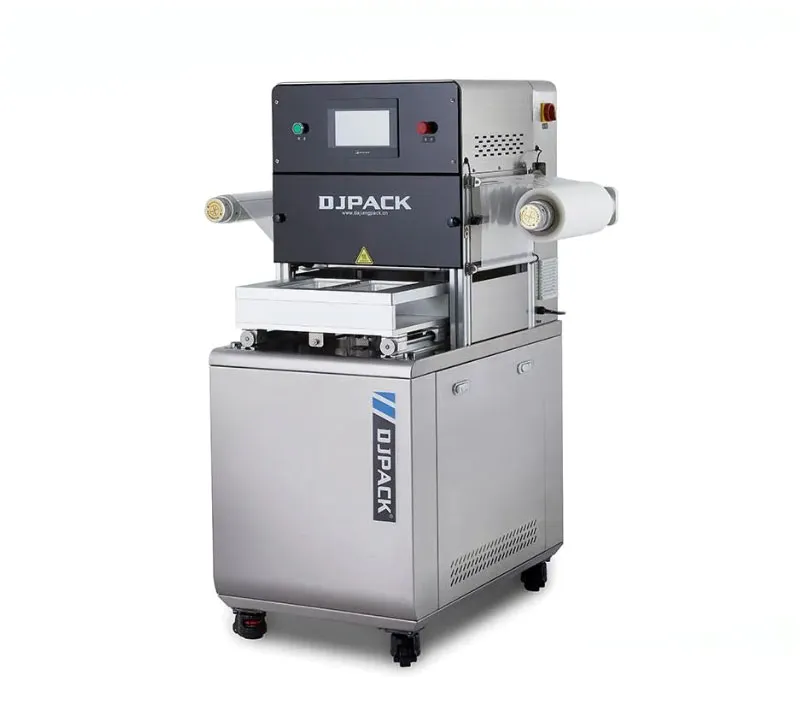
What about shrink wrapping? It removes some air but rarely reaches the oxygen levels required to truly inhibit microbial growth (typically requiring at least 98 per cent evacuation). Modified Atmosphere Packaging (MAP) replaces oxygen with nitrogen or carbon dioxide, extending shelf life significantly but demanding expensive gas blends and specialised equipment.
Here’s the overlooked reality: none of these alternatives offers the integrity verification that a chamber-based approach provides. A properly executed vacuum package gives you immediate visual feedback — bags should shrink tightly around contents, with no visible air pockets. If a seal fails, you know instantly. With plastic wrap or MAP? Quality degradation happens invisibly until you open a spoiled product.
The Bottom Line: Your Preservation Strategy Needs an Upgrade
Vacuum technology isn’t magic — it’s science, and the science is settled. Removing oxygen eliminates the primary catalyst for food degradation, reducing spoilage bacteria by creating an environment where aerobic organisms simply can’t reproduce. And while you still need temperature control (vacuum doesn’t replace refrigeration; it enhances it), the combination yields shelf life extensions that transform inventory economics.
The market agrees. Global demand continues climbing at nearly 4 per cent annually, driven by businesses finally recognising that preservation isn’t a cost centre — it’s a profit lever. Whether you’re running a farm-to-table restaurant, an e-commerce meat subscription service, or a pharmaceutical packaging line, the principles remain identical: consistent vacuum levels, durable seals, and support infrastructure that doesn’t leave you stranded when a heating element fails at 6 PM on a Friday.





 English
 Pусский