
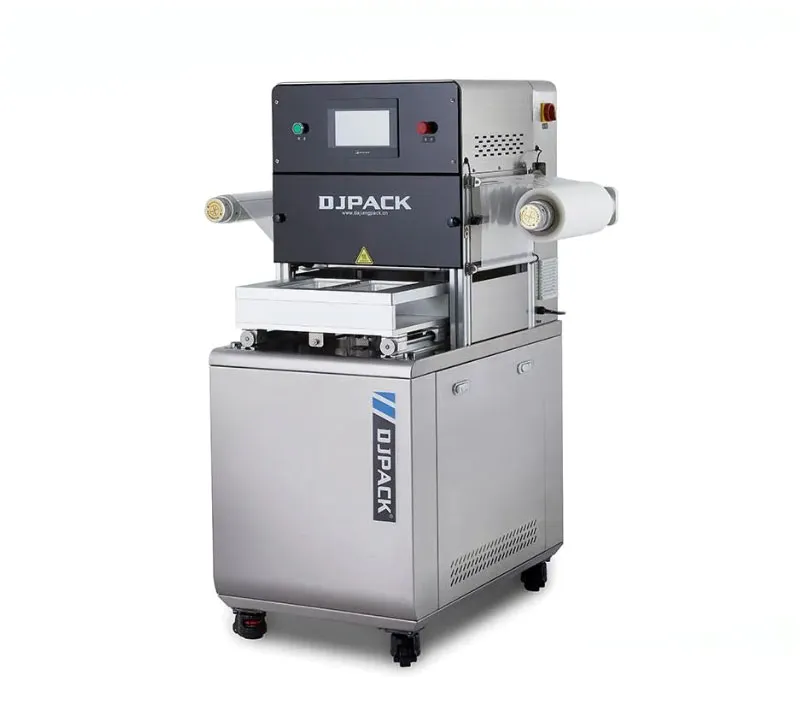
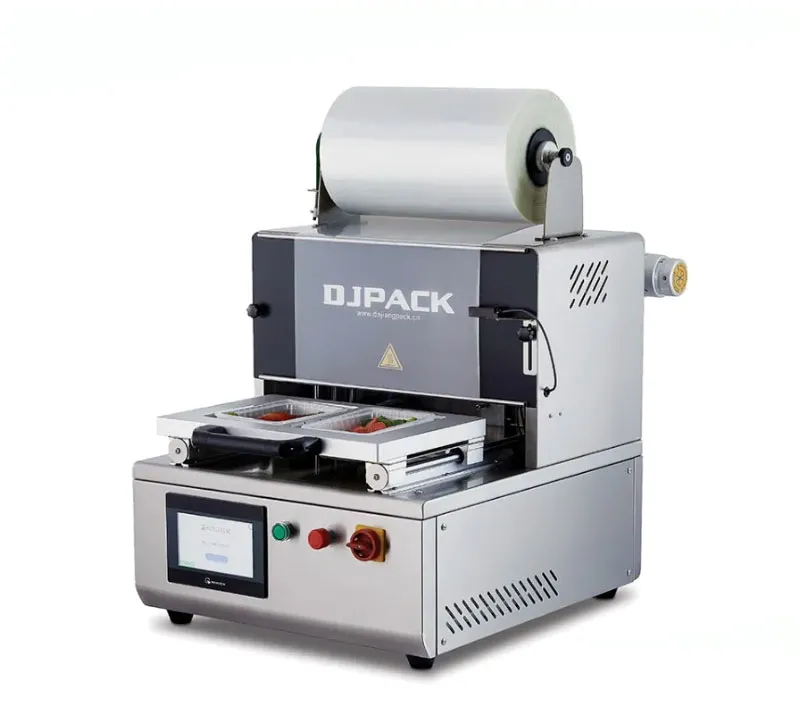
The gas displacement technologies in tray modified atmosphere packaging machines are mainly divided into vacuum displacement and gas flushing. Vacuum displacement works by first forcibly extracting air from the sealed chamber to create a high vacuum environment, thereby completely removing oxygen from the package, then filling with a precisely proportioned mixed protective gas for preservation. Its core advantage is extremely high gas displacement efficiency, effectively reducing residual oxygen to very low levels, while consuming less gas due to one-time gas filling. However, the disadvantage is that the equipment requires a vacuum system, resulting in higher manufacturing costs, and the vacuum pumping process leads to longer single cycle times.
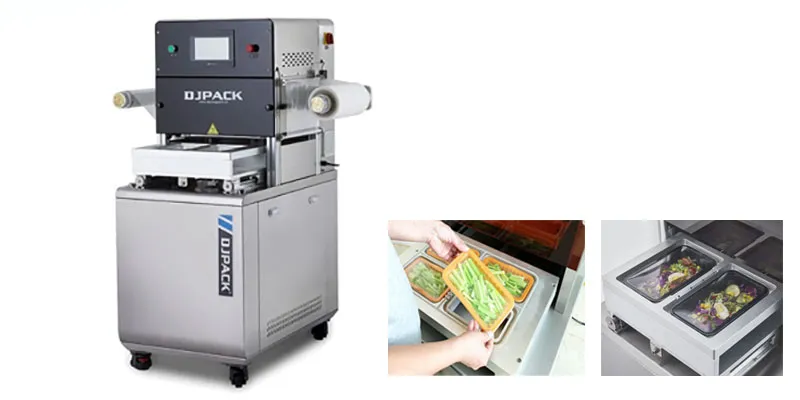
Gas flushing employs a different principle: after sealing the chamber, it continuously injects a large amount of protective gas, using airflow flushing and positive pressure to force out the original air from the exhaust port. This method does not require vacuum, thus having short cycle times and high production efficiency. However, its gas displacement relies on flushing and dilution, making it difficult to completely remove residual air, resulting in relatively lower displacement efficiency. To ensure effectiveness, continuous gas injection is required, leading to high gas consumption. In summary, vacuum displacement is suitable for applications requiring extreme residual oxygen control and sensitivity to gas costs, while gas flushing is more suitable for scenarios prioritizing production efficiency and having slightly looser requirements for residual oxygen.
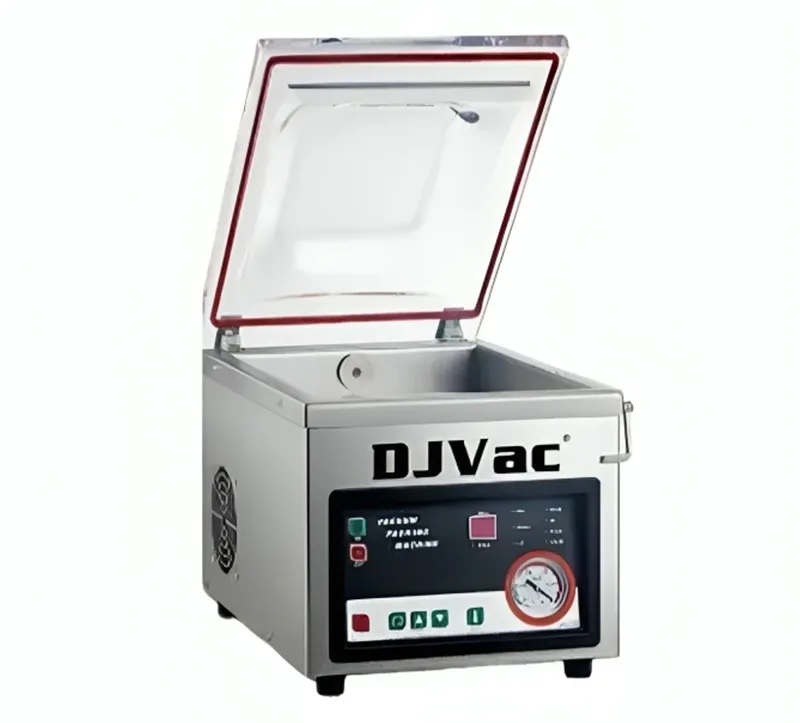
Explore our comprehensive Vacuum Packaging production solutions at www.djpackmach.com





 English
 Pусский